




Description
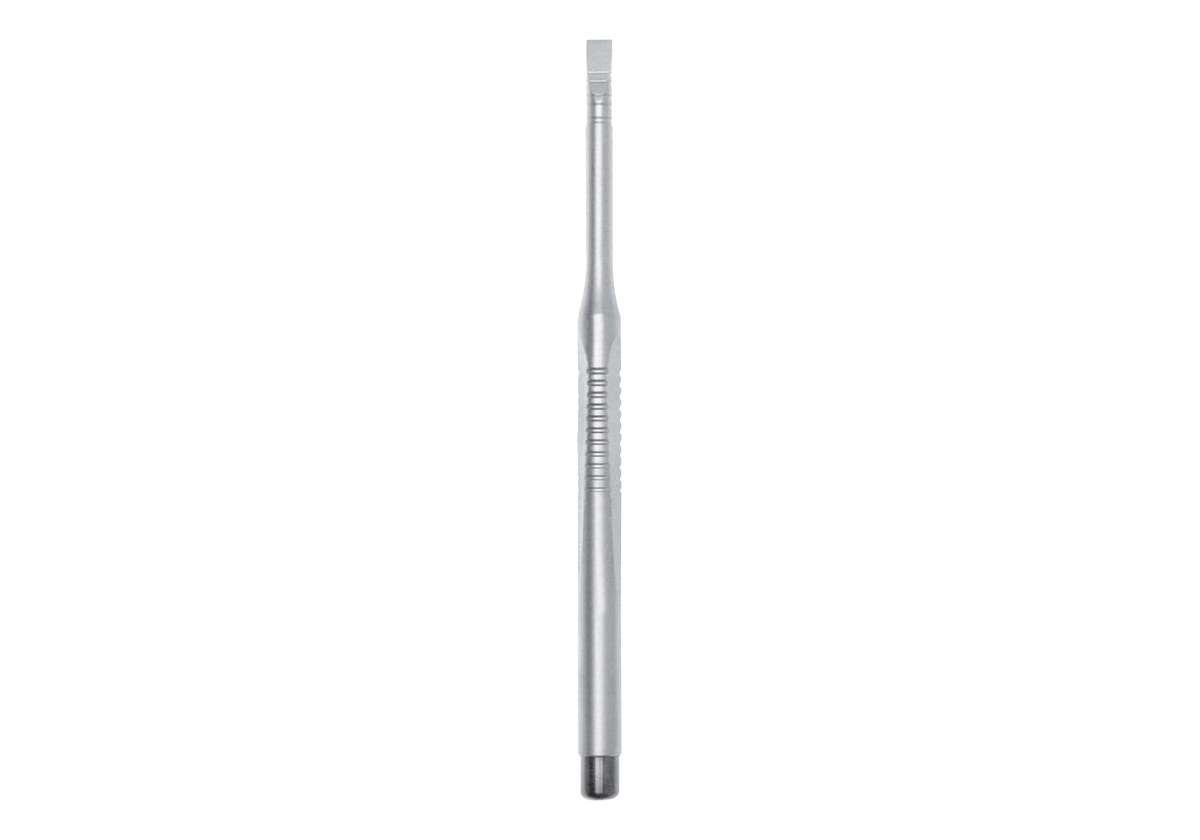
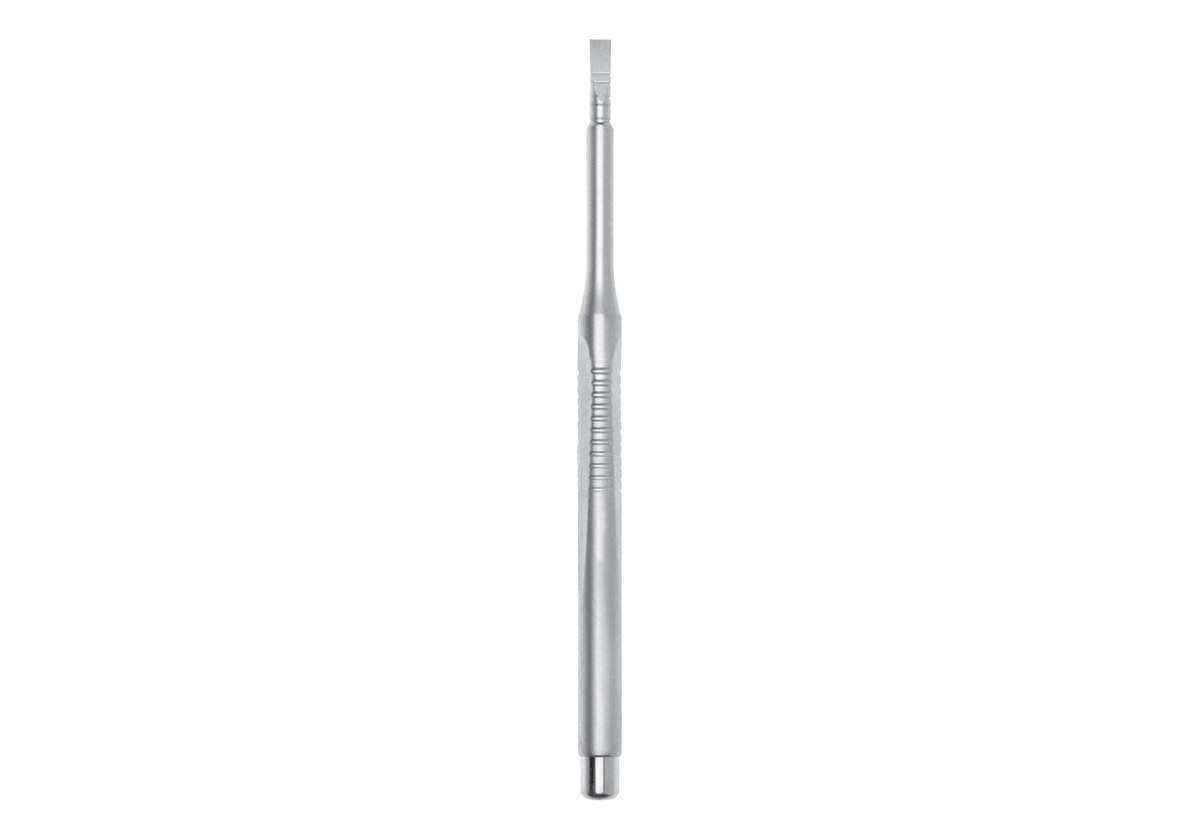
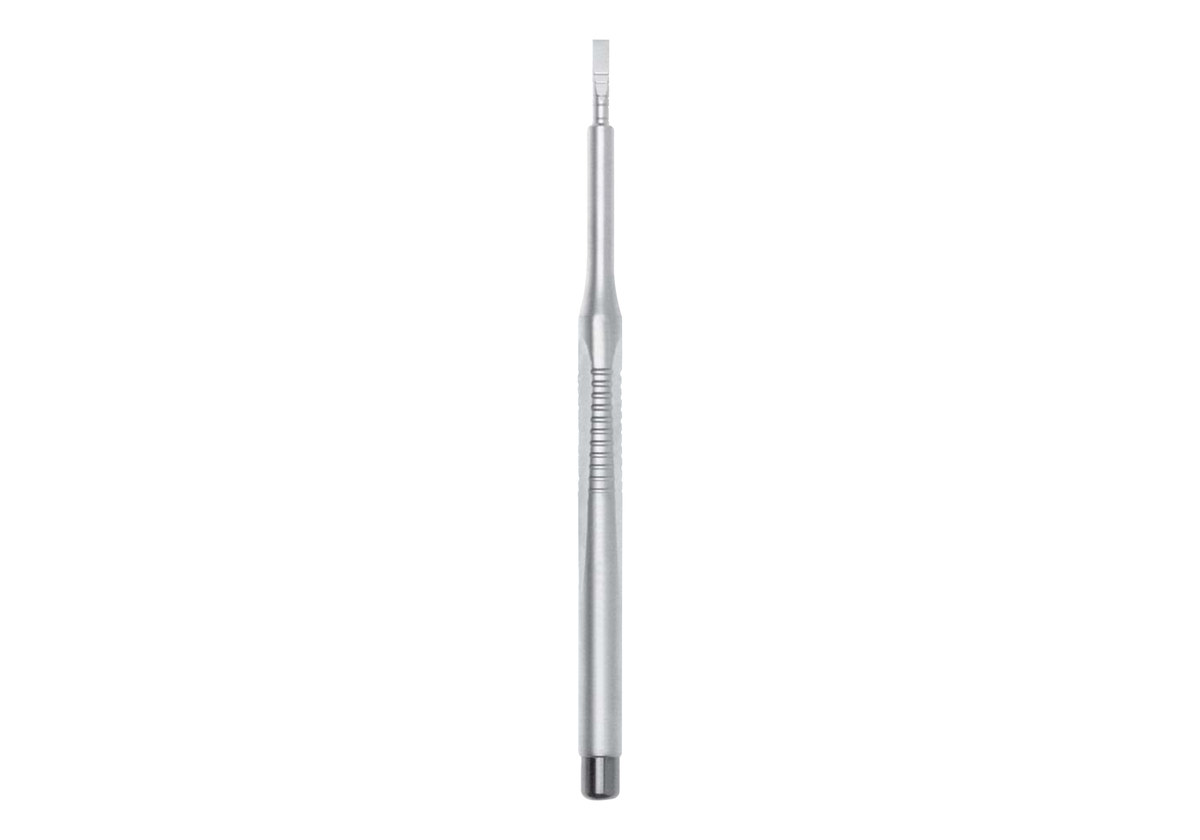
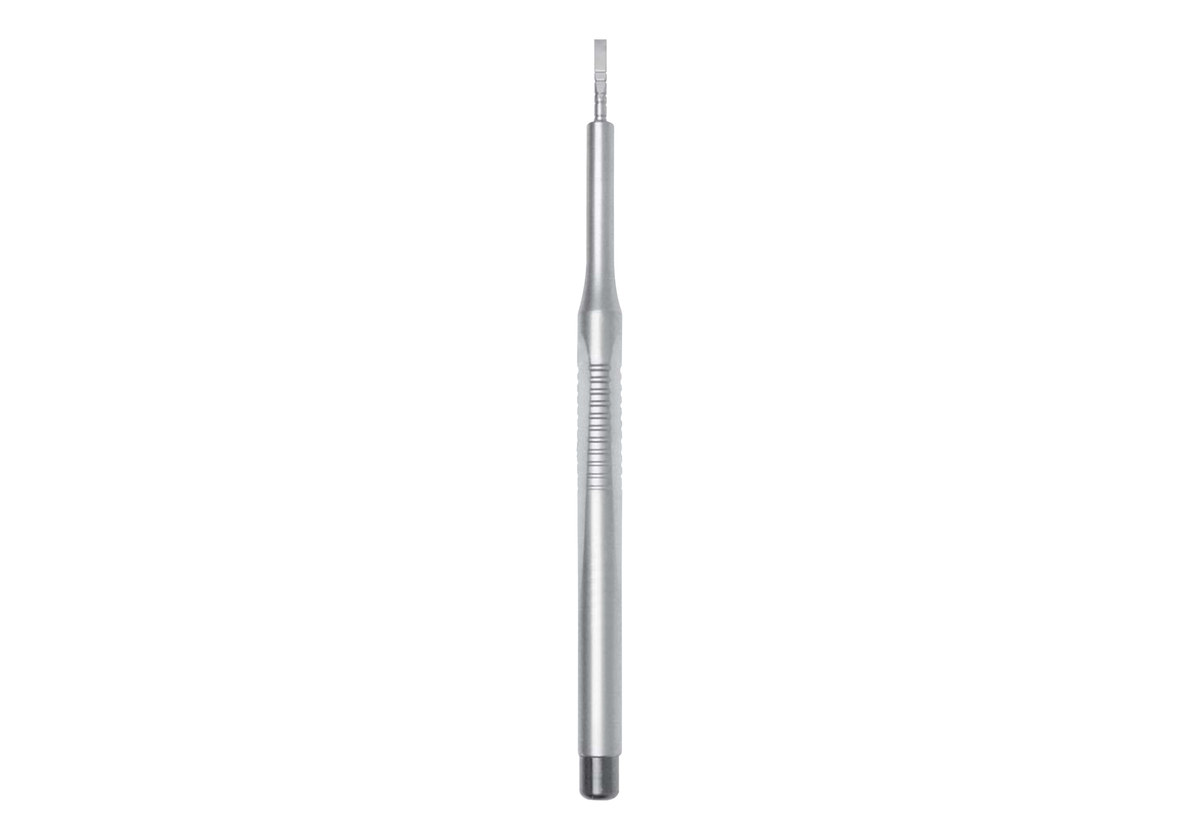
Ridge Splitting Chisel
A thin alveolar crest often leaves too little bone width for an implant. A ridge splitting chisel lets the surgeon open that crest along its length, so the buccal and lingual plates separate and a gap forms for the fixture. Each chisel here is stainless steel and is sold by tip width. That way, you can stock exactly the sequence your protocol calls for.
A Sequence From 3.0 to 6.0 mm
Four tip widths are available: 3.0 mm, 4.0 mm, 5.0 mm and 6.0 mm. Most splitting protocols begin narrow. First, the 3.0 mm chisel scores and enters the crest. Next, the 4.0 mm and 5.0 mm tips deepen and widen the split a step at a time. Finally, the 6.0 mm chisel opens the widest channel when the ridge allows. Buying the full run gives you a controlled progression, while single sizes replace a worn or missing step.
- 3.0 mm: initial entry into a narrow crest
- 4.0 mm: second step of the expansion
- 5.0 mm: further widening
- 6.0 mm: the broadest tip offered
Driving the Chisel With Control
Surgeons usually advance a ridge chisel with light mallet taps rather than hand pressure. Because the plates can fracture if forced, small increments matter more than speed. So check the split after every few taps, and only then step up to the next width.
From Our Bench to Your Tray
In our United States facility, every chisel receives a visual and edge check prior to dispatch. It comes non-sterile, therefore wash, dry and autoclave it before use. Edges dull with normal service; however, flaws in material or workmanship are covered for three years against manufacturing defects.
Stainless steel in these chisels meets the ASTM F899 alloy standard. A balanced Mead Mallet pairs well with the set. Also browse Dental Implant Instruments or the Osteotomes range, and see our FAQs for account questions.
Ridge splitting tools are meant for trained professionals in implant surgery only. Read the care and sterilization steps, and visit shipping and delivery for timing.

Reviews
There are no reviews yet.