




Description
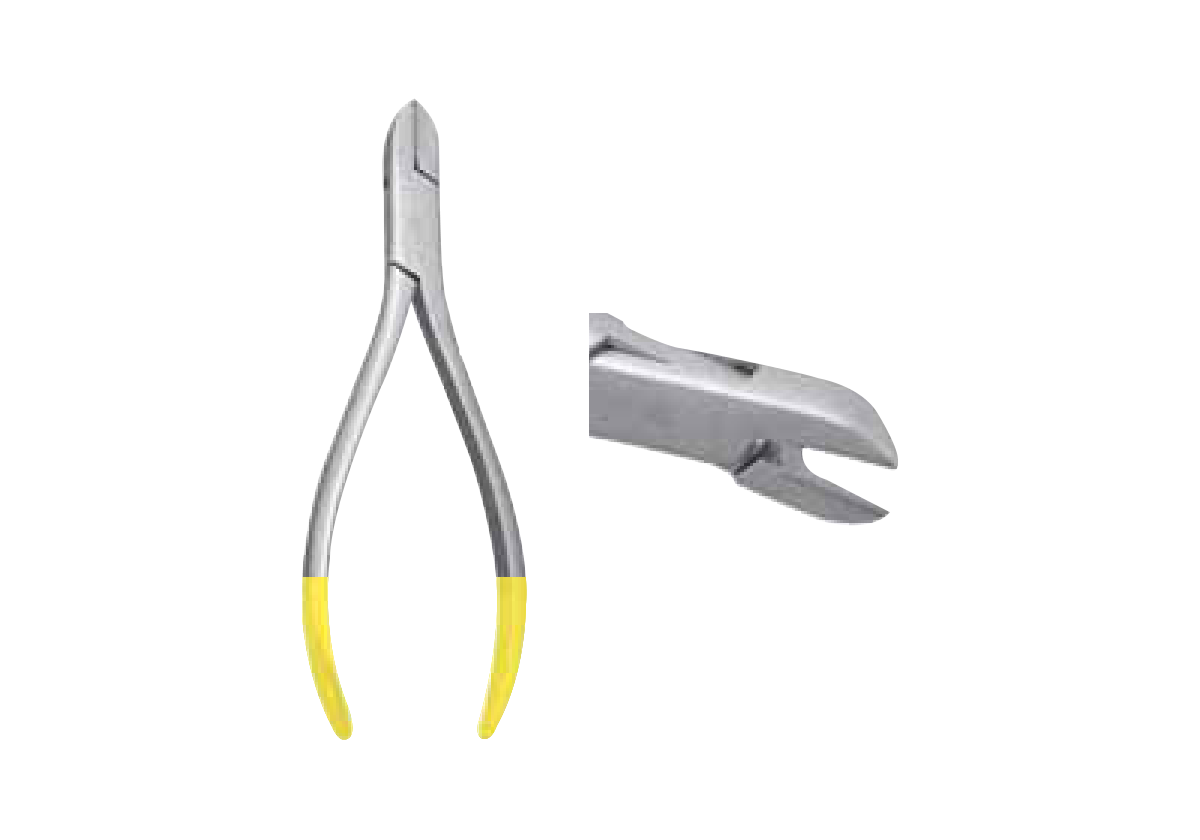
T.C. Hard Wire Cutters
Heavy wire dulls plain steel edges fast. Our tungsten-carbide hard wire cutters use T.C. inserts that keep an edge longer. The catalogue rates them for wire from 0.70 mm to 1.00 mm (.028″ to .040″).
Why Carbide Inserts
Carbide is harder than the steel body around it. So carbide hard wire cutters suit a busy lab. As a result, the cutting edge stays sharp for longer under heavy use. That means cleaner cuts and less effort, month after month.
The Rated Range
Cut only within 0.70 mm to 1.00 mm (.028″ to .040″). Thicker wire can chip the inserts. Also avoid cutting very fine wire with it, since a ligature cutter does that job better.
Lab and Chair Uses
- Trimming heavy archwire and lingual arch wire.
- Cutting lab wire for appliances and clasps.
- Shortening headgear and facebow wire.
A Safe Cut
Short ends can fly when you cut stiff wire. So hold the loose end or cover it with a gauze square. Then cut with a firm, single squeeze.
Insert Care
Study the edges under a bright lamp now and then. If you see a chip, stop using the cutter and contact us. In addition, keep the joint clean and lightly oiled so the jaws close true.
Cover, Steel and Ordering
The cutter follows our own specification, and a US reviewer checks it by hand. The stainless body conforms to ASTM F899, while the carbide does the cutting. If the making proves faulty, three years against manufacturing defects apply, and we replace a cutter that fails that way. It ships non-sterile, so wash and sterilize it first; it can then return to work many times. For the non-carbide version, see our hard wire cutters. Then browse our orthodontic cutters and pliers, and our FAQ page for buyers covers the rest.
Professional use only. Review our sterilization page and shipping policy as you plan.

Reviews
There are no reviews yet.