




Description
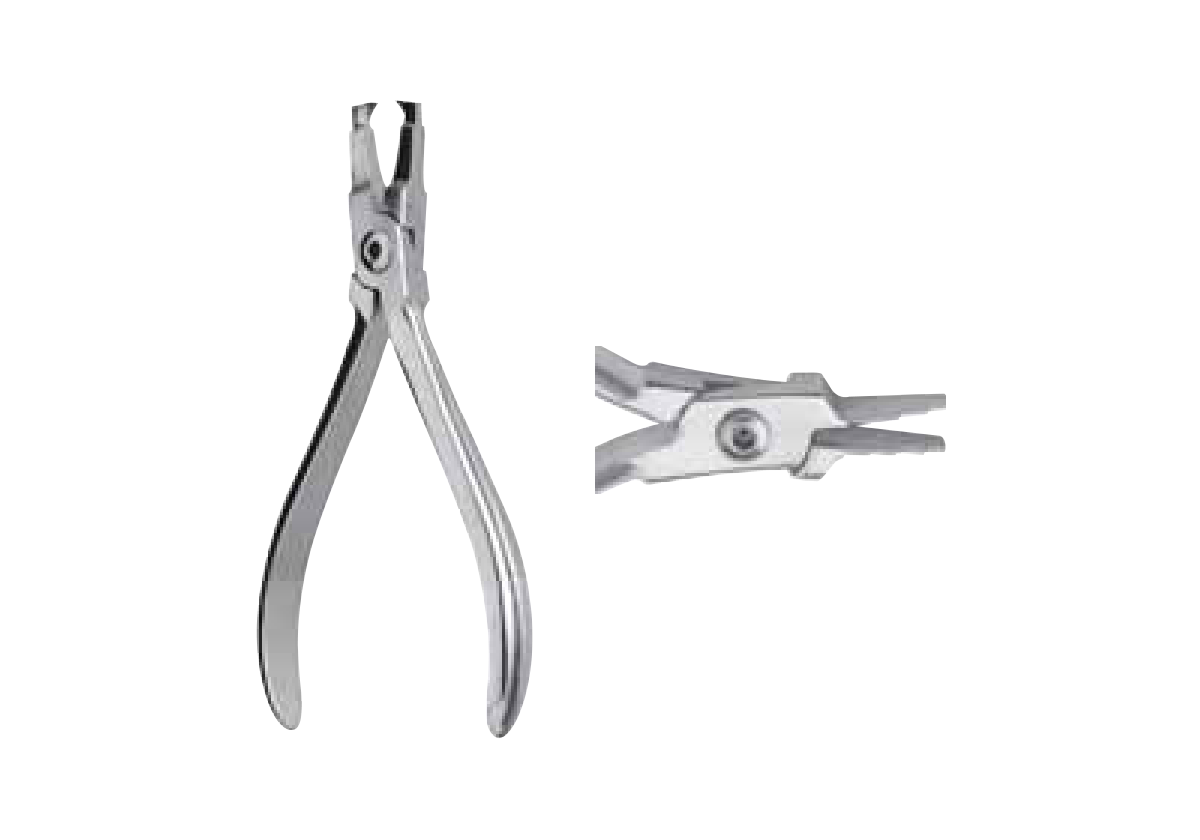
Step Loop Forming Pliers, 3–6 mm
Loops on each side of the arch should match. Our step loop forming pliers give you four fixed sizes, 3, 4, 5 and 6 mm. So you can form the same loop twice, on the left and the right, without guessing.
Four Sizes on One Beak
The steps sit one above the other on the beak. You simply pick the step that matches the loop you want. Then you wrap the wire around it, and the step sets the size.
Repeatable Loops
Free-hand loops often vary by a little. That small change can alter how a loop springs. By contrast, a stepped beak repeats the same size, case after case.
Choosing the Right Step
- 3 mm suits small helices and tight stops.
- 4 mm and 5 mm cover many closing and vertical loops.
- 6 mm gives a larger loop with a softer spring.
These are general guides, not rules. In the end, your plan and wire choice decide the size.
Wire Sense
Keep to wire your clinic uses for loop work. Stiff, heavy stock can strain the steps and wear their edges. Also, form each loop with steady pressure, since sharp jerks can kink the wire.
Look After the Steps
Each step has an edge that shapes the wire. Over time, rough handling can round it. For this reason, store the plier closed and apart from heavy tools. Then check the steps under good light every few weeks.
Support and Standards
We have it built to our own specification and inspected stateside. Stainless steel to ASTM F899 forms both the body and the steps. We honor three years against manufacturing defects, so if a step or joint proves faulty, the fix falls to us. It comes non-sterile; after one wash and sterile cycle, you may reuse it from then on. For loops in heavier wire, view the Nance loop forming pliers. You may also like our loop and bending pliers and our help centre.
Professional use only. Read up on sterilizing pliers and on how we ship.

Reviews
There are no reviews yet.