
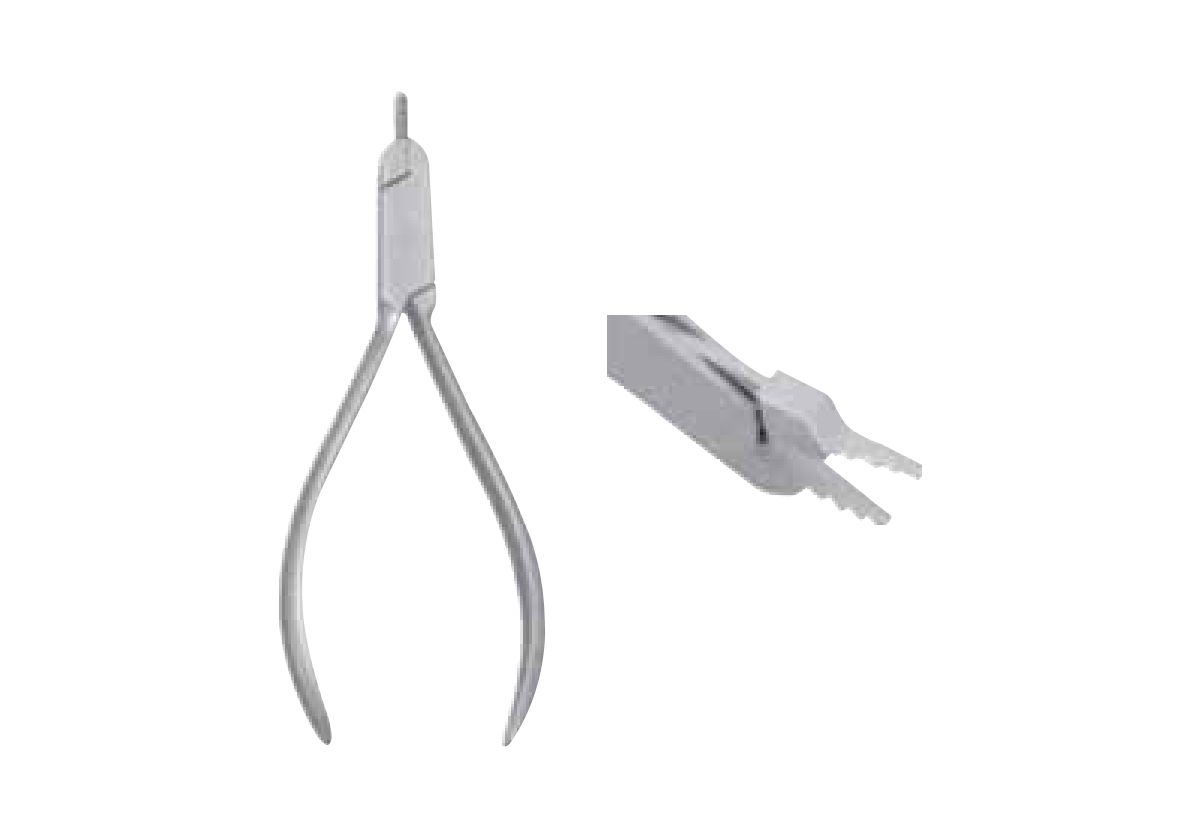




Description
Nance Loop Forming Pliers
Nance loop pliers help you form loops in archwire. Loops add spring and give you a place to apply force. This plier handles both round and rectangular wire.
Why add a loop
A loop lets the wire flex in a set way. For example, an open or closing loop can help move a tooth along the arch. The Nance plier gives you a steady form for each loop.
Capacity in plain numbers
Expect round wire from .014” to .028” to sit well in the beaks. Rectangular wire is fine up to .022 x .028 in. So the Nance loop pliers cover light wire and many working archwires.
A loop, step by step
- Mark where the loop will sit on the wire.
- Grip the wire at the mark and make the first bend.
- Wrap the wire around the beak to form the loop.
- Check that both legs sit level before you place it.
Matching loops on both sides
Loops on each side should match in size. Therefore, form them at the same point on the beak. A fine marker line on the wire also helps you keep track.
Clean beaks, even loops
Debris on the beaks can make loops uneven. So clean the plier soon after use, before anything dries on it. Then dry it well and store it with the tips closed.
Ordering and service
Our specification shapes the build, and a hand check in the US comes after. Its stainless steel meets the terms of ASTM F899. You receive the plier non-sterile; with cleaning and sterilisation between cases, you can use it over the years. Our warranty is also three years against manufacturing defects should something in the build fail. To close loops later, see the Nance loop closing plier. Our orthodontic plier collection and frequent questions have more.
Professional use only. Look over our care information and delivery information.

Reviews
There are no reviews yet.