




Description
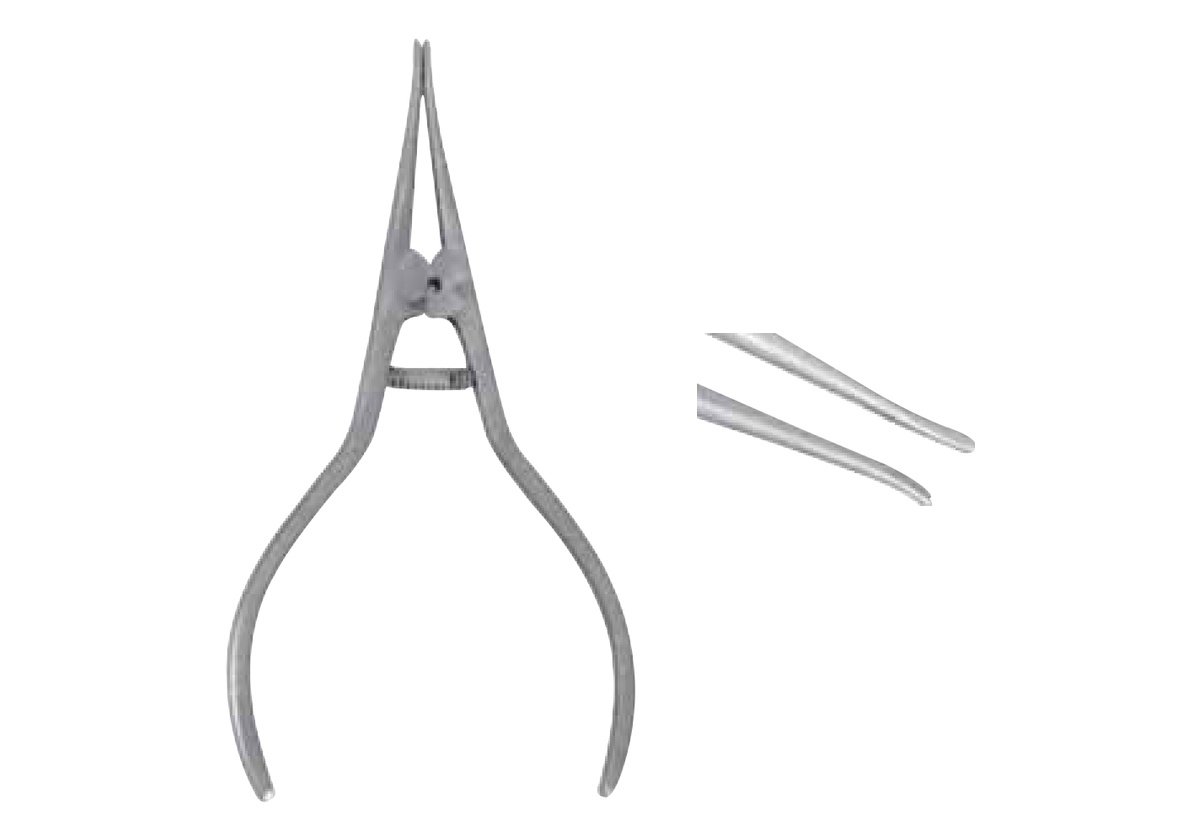
Steiner Ligature Tying Forceps
Tying a steel ligature takes a firm, small grip. These Steiner tying forceps are a named pattern of ligature tying forceps. You use them to tie steel ligature wire around the bracket wings. The catalogue lists the name only, so we describe the general task and suggest you check the photo.
A Pattern With a Name
Many orthodontic tools carry the name of the person linked with the design. Steiner is one such name. However, the catalogue gives no drawing notes beyond that. So please compare the photo with the pattern you know.
The Job of a Tying Forceps
A steel tie wraps around the bracket and over the wire. First, you place the ligature behind the wings. Then you grip the free ends and twist them tight. Finally, you cut the tail and tuck it under the wire. A tying forceps helps with the grip and twist steps.
Good Habits When Tying
- Twist only until the tie sits snug; more can snap the wire.
- Keep the twist close to the bracket.
- Tuck the cut end so it does not catch the lip.
Clearing Wire Scraps From the Joint
Wire scraps can lodge near the joint. Therefore, brush the joint after each use, then rinse and dry. Also, add a touch of oil to keep the action smooth. Because the forceps leave us non-sterile, clean and sterilize them before each use.
Warranty, Standard and Further Choices
The stainless steel meets ASTM F899. Our Steiner tying forceps follow a pattern we define, and an inspector in the US examines each pair. A build fault is our concern for a full span of three years against manufacturing defects. For another pattern, compare the Coon ligature tying forceps. Our orthodontic listings show more, and our FAQ entries help with orders.
For trained clinical staff. Look over our reprocessing page and shipping times page.

Reviews
There are no reviews yet.