




Description
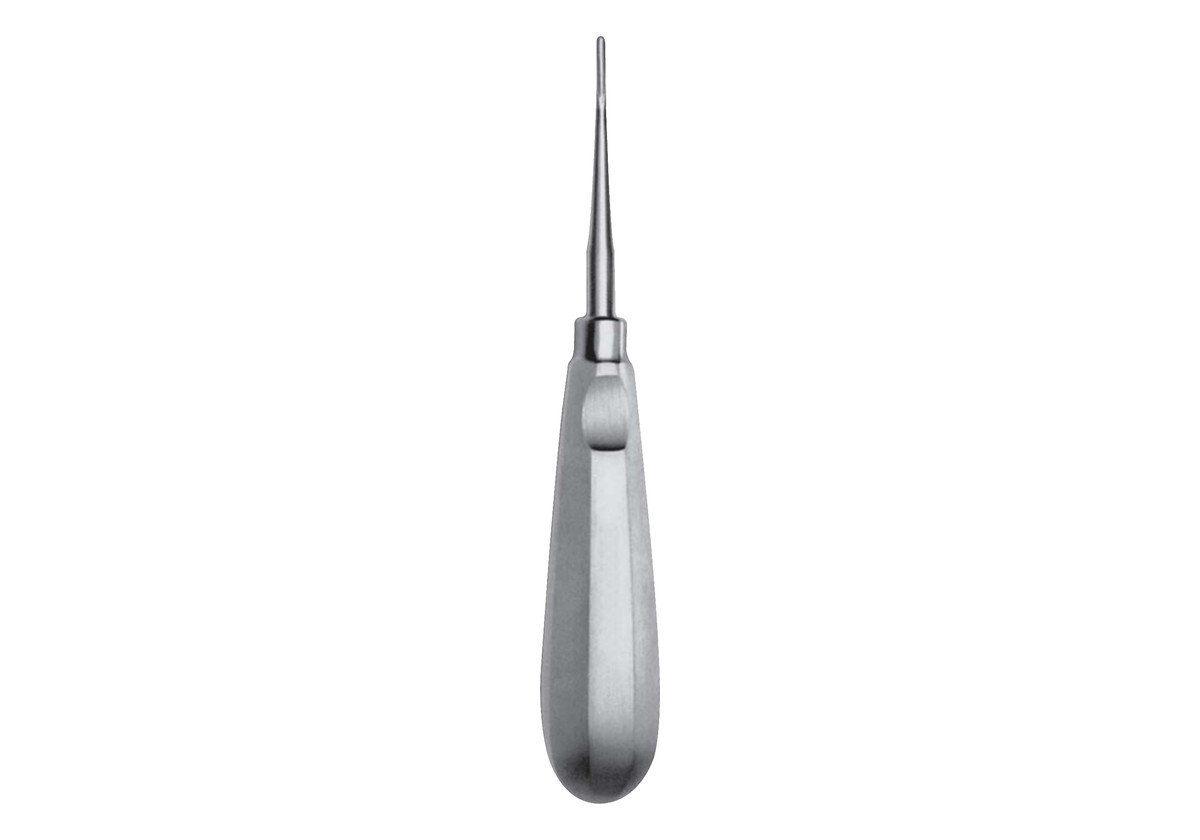
Grooved Luxating Elevator
A grooved luxating elevator has a channel along the face of its blade. As you push into the ligament space, fluid and debris escape up that channel. So the blade does not build up hydraulic pressure in the socket.
What the groove does for you
A flat blade can trap blood ahead of the tip. That trapped fluid pushes back, and the blade can feel spongy. With a groove, however, the fluid has a way out. As a result, the tip keeps in touch with the ligament and cuts more cleanly.
Four widths to choose from
We offer the blade in 2 mm, 3 mm, 4 mm and 5 mm widths, and each width is sold on its own. The same logic applies as with a plain luxating blade:
- 2 mm and 3 mm: incisors and other slim roots.
- 4 mm: premolars.
- 5 mm: broad molar roots.
Generally, start with the narrowest width that fits, then move up as the space opens.
Technique in brief
Seat the tip in the PDL space and keep a firm finger rest. Then press gently toward the apex and turn the blade a little. Work around the root in small steps. Never use it to pry, because the edge is thin.
A good choice before implants
Since the blade cuts fibres rather than crushing bone, it helps you keep the buccal plate. For this reason, many dentists reach for it when an implant is planned.
Ordering and support
The grooved luxating elevator reaches you non-sterile. Brush the groove clear, then clean and sterilize it, and it serves for many cases. Built to our specification, it uses ASTM F899 stainless steel and receives a final inspection in the United States. Our warranty gives this blade three years against manufacturing defects, and we repair or swap any piece that fails for that reason. For a plain blade, see the ungrooved luxating periotome; for more choices, open the dental elevator category. Answers on billing sit on our FAQs page.
Professional use only. Our care notes and shipping times deserve a brief read first.
Reviews
There are no reviews yet.