




Description
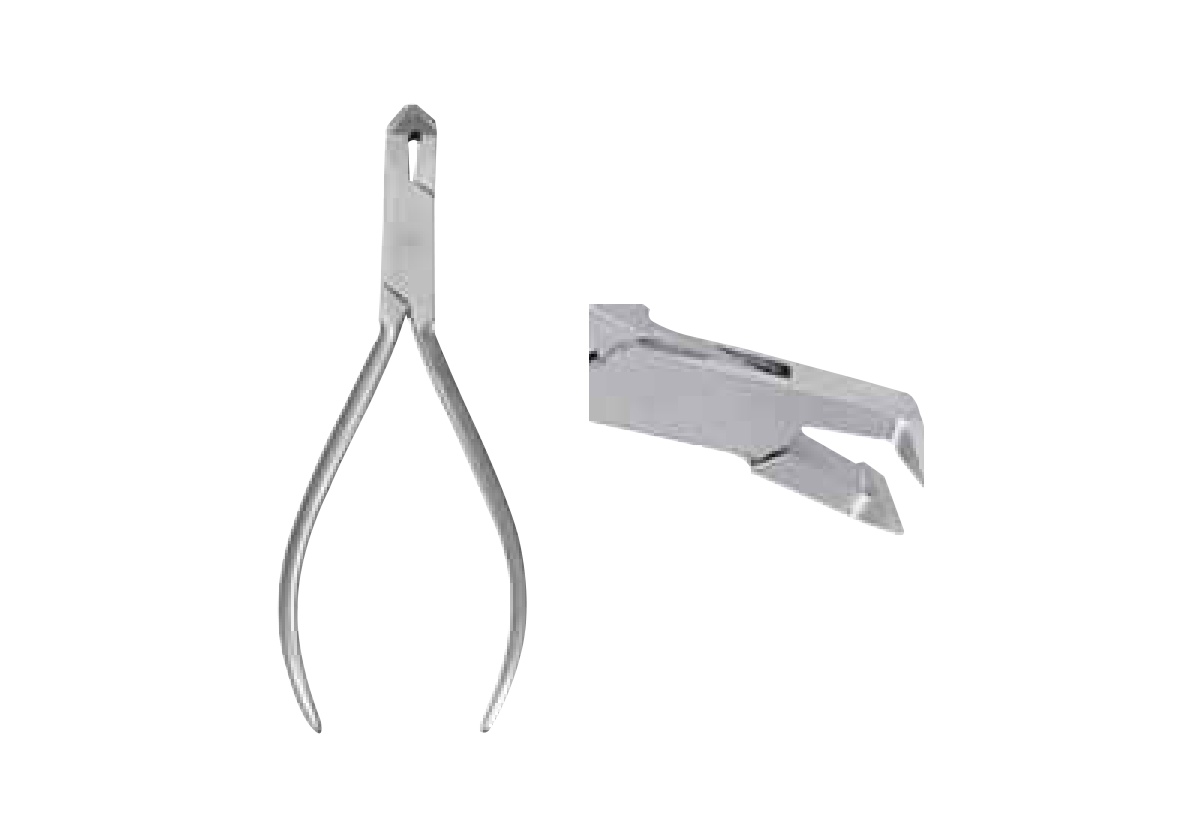
Distal End Bending Pliers
Distal bending pliers turn down the archwire end behind the last tube. A bent end stops the wire from sliding and keeps it off the cheek. We offer three patterns, and any one can be ordered alone.
Why bend the end
A straight wire end can slip forward or poke the cheek. However, a short bend locks it in place. As a result, the arch length stays set until the next visit.
Hammer Head, Cinch-Back, Standard
- Hammer Head: a hammer head pattern for the distal end.
- Cinch-Back: a cinch back or tie back pattern.
- Standard: the plain pattern for routine work.
Across all three, round wire from .012” to .020” is within range. Likewise, each accepts rectangular wire to .022 x .028 in.
Cinch back or turn down
If you cinch back most wires, the Cinch-Back is a clear pick. For other turn down bends, start with the Standard. Then check the photo of the Hammer Head to see if its shape suits your style.
Trim first, then bend
You often trim the wire first and then bend it. For that reason, many clinicians keep distal bending pliers next to a distal end cutter. Together they finish the wire end in two quick steps.
Back of the mouth wear
Work at the back of the mouth puts the plier through a lot. So clean it soon after use and dry it fully. If the action feels stiff, add a drop of oil and work the joint a few times.
Getting yours
Our specification is the blueprint, and an inspection in the United States follows. When it comes to steel, the stainless used stands up to ASTM F899. It turns up non-sterile; then, with cleaning and sterilisation, you can reuse it for as long as it lasts. If a manufacturing issue ever comes to light, our warranty runs a solid three years against manufacturing defects. To trim first, see the safety hold distal end cutter. You can also visit the orthodontic instruments area or our help questions.
For professional use only. Our sterilisation page and delivery details page are worth a look.

Reviews
There are no reviews yet.