




Description
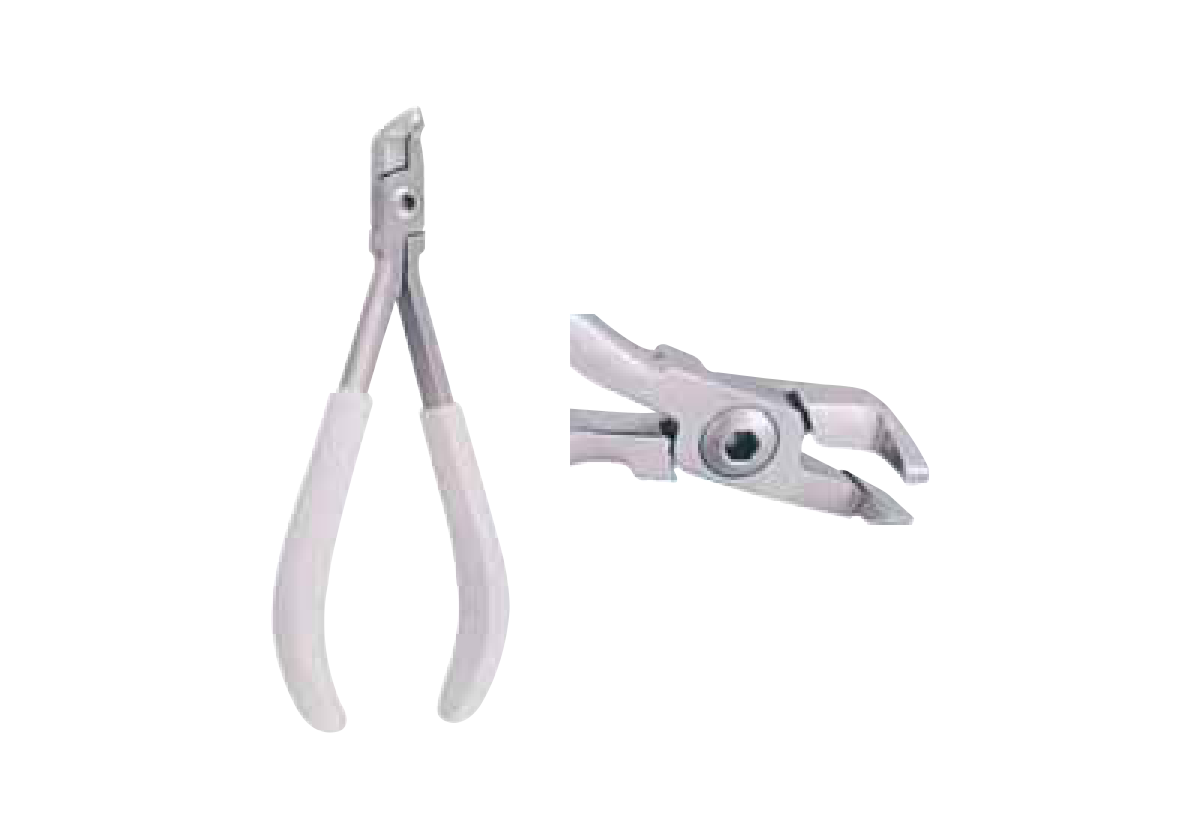
Distal End Cutters, Safety Hold
Distal end cutters trim the archwire end behind the last bracket or tube. The safety hold keeps the cut piece in the jaws, so it does not drop into the mouth. We offer four heads, and you may buy just the one you need.
Why the safety hold matters
A loose wire end can fall toward the throat. However, this cutter grips the spare piece as it cuts. So you lift it out with the plier, and the patient never feels it.
Flush Cut, Mini Head or Standard
- Flush Cut: leaves a flush end and handles rectangular wire to .018” x .025”.
- Mini Head, Long Handles: a small head on longer handles for reach.
- Mini Head: a small head for tight spaces at the back of the arch.
- Standard: the full size head, the heaviest of the four at .022” x .028”.
Every head takes round archwire between .012” and .020”. In addition, both mini heads are rated for a range of wire sizes up to .021” x .025”.
Small mouths and crowded molars
Start with the Standard if you cut a wide range of wire. Then add a Mini Head for small mouths or crowded molars. The long handle version helps when you need more reach.
Keep cuts inside the rating
The tips are stainless steel, and they last longest when you stay in range. Therefore, never cut wire above the listed size. Also, keep the tips closed in storage to guard the edges of your distal end cutters.
Ordering a distal cutter
Each cutter is produced to our specification, and the final inspection happens in the United States. Stainless steel to the ASTM F899 standard forms the head and handles. It arrives non-sterile, and proper cleaning plus sterilisation lets you reuse it many times. On every head we give three years against manufacturing defects, so a genuine flaw is on us. If you want tungsten-carbide inserts, see the T.C. version of this cutter. Our orthodontic cutters and pliers and order FAQs have more.
For clinical professionals. Check our sterilization guide and delivery details too.
Reviews
There are no reviews yet.