




Description
Tweed Loop Forming Pliers
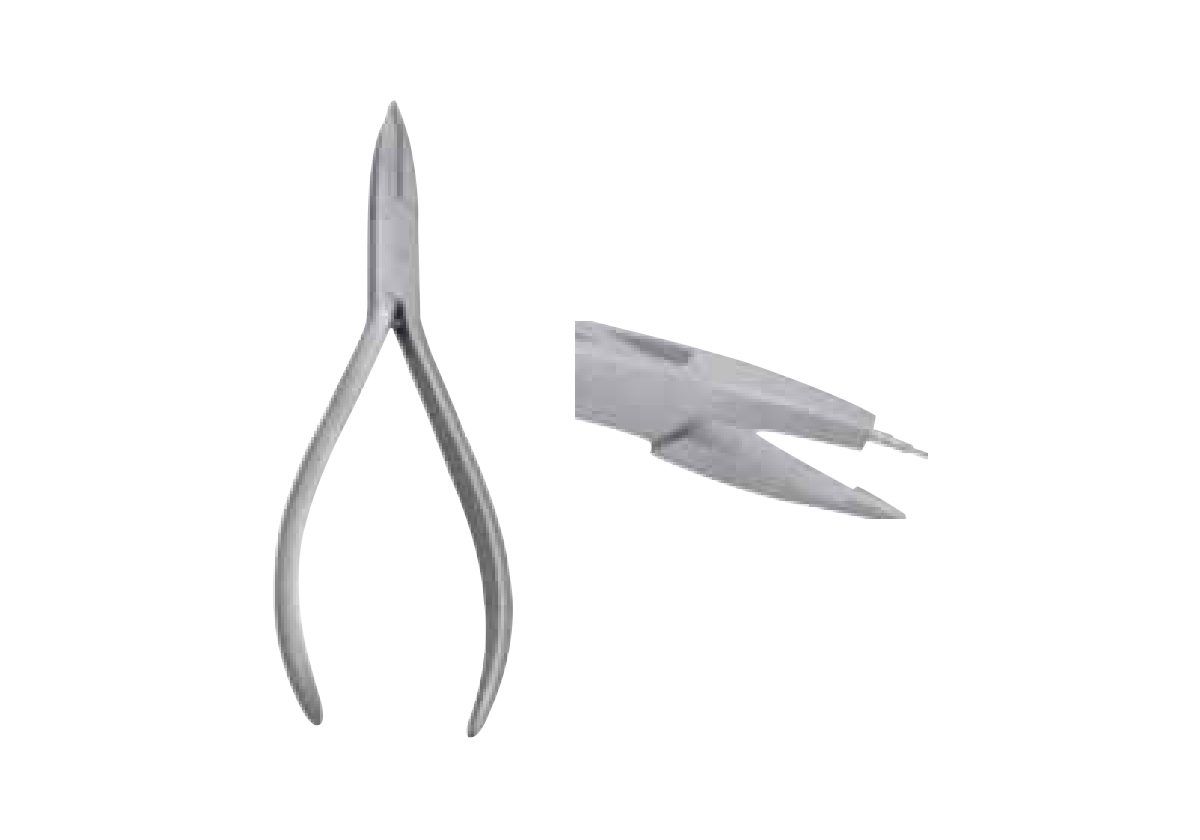
Tweed loop pliers have stepped round beaks for forming loops in archwire. Each step gives a different loop size. So you can repeat the same loop each time.
Stepped beaks, steady loops
The steps on the beak act like a guide. When you wrap wire at one step, you get a set loop size. As a result, loops on the left and right side match more easily.
With Cutter or Standard
We offer two options, sold one at a time. With Cutter adds a cutting edge and suits round wire of .012” to .020”. By contrast, the Standard takes slightly heavier round wire, from .014” to .025”. For rectangular work, both stop at .021” x .025”.
Which Tweed to pick
- Pick With Cutter if you trim loop ends as you work.
- Pick the Standard for loop work in slightly heavier round wire.
- Keep both if you form many loops each week.
Loops in rectangular wire
Tweed work often uses rectangular wire. Still, stay within the listed max size. Bending above it can strain the beaks and spoil the steps of your Tweed loop pliers.
Care for the cutter edge
On the With Cutter option, the edge needs care. So cut only wire inside its range. Then wipe and dry the plier, and check the edge closes cleanly.
Placing a Tweed order
We have every plier made to our own specification, and the inspection is done in the United States. Your plier’s stainless steel is true to ASTM F899. It comes non-sterile; then, after cleaning and sterilisation, you can reuse it on each patient. Our cover for this plier is three years against manufacturing defects from the time of purchase. For a different loop form, try our step loop plier 3–6 mm. Browse the orthodontic tool range or read the FAQ list.
For professional use only. Our care and sterilisation page and shipping details explain more.

Reviews
There are no reviews yet.