




Description
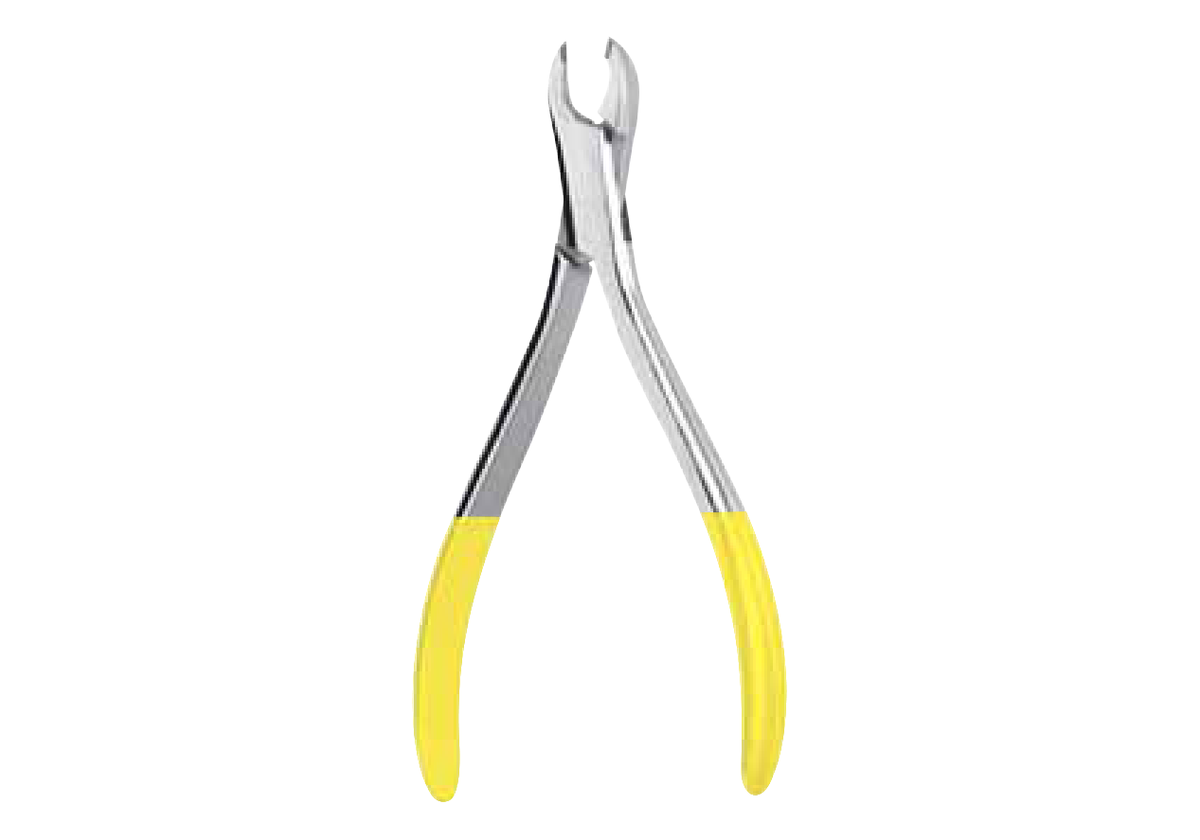
T.C. Pin and Ligature Cutter
Steel ties need a sharp, fine tip to cut cleanly near the bracket. This carbide ligature cutter does just that. Its tungsten-carbide (T.C.) edges hold their sharpness longer than plain steel. It trims steel ligatures and pins at the chair.
Fine Beaks for Tight Spaces
Ligature work happens close to the bracket and the gum. So the cutter needs fine beaks that slip in without bulk. That is also why the tips are slim. With a precise tip, you can cut the tie and leave a neat end. After that, a separate tool tucks the end away.
What It Should Not Cut
This tool is for ligatures and pins, so it is not for heavy archwire or lab wire. Otherwise, the fine edges can chip on thick wire. Instead, use a hard wire cutter for that job. Keeping each cutter to its own task adds years of use.
- Cuts steel ligatures
- Trims pins
- Tungsten-carbide edges
- One item, no options
A Typical Archwire Visit
First, you remove the old ties. Next, the new wire goes in. Then you tie it in and trim each ligature. Finally, you tuck the cut ends. This cutter sits at the centre of that routine, which is why many clinics keep two on hand.
Edge Checks
Hold the closed cutter up to the light. Ideally, the edges meet along their whole length. So if you see light through a gap, the edges need attention. Also clean the edges between patients, since dried residue dulls them.
Ready for Clinic
It follows our own spec and comes non-sterile. Thereafter, each cleaning and sterilisation lets you reuse it.
Your carbide ligature cutter has three years against manufacturing defects behind every edge. The stainless steel meets ASTM F899. To tuck the cut ends, add an orthodontic ligature director. Browse every cutter in our orthodontic instruments category, or check our FAQ for order help.
Professional use only. See how to care for carbide edges and our delivery information.

Reviews
There are no reviews yet.