




Description
Stieglitz Splinter Forceps
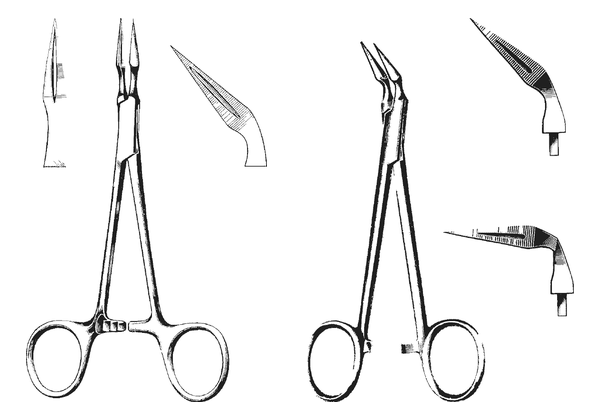
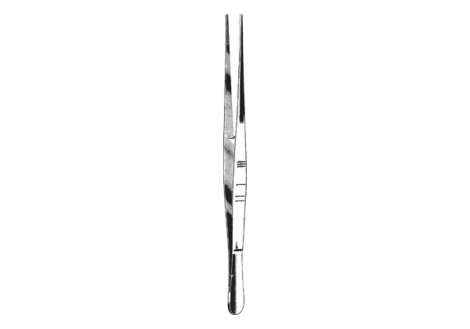
Stieglitz splinter forceps combine ring handles with long, fine jaws. You can pick straight jaws or jaws angled at 45 or 90 degrees.
Three tip angles
The straight jaws suit fragments you can approach directly. However, the 45 and 90 degree jaws turn the tips toward targets behind a ridge or in a socket.
Fine pointed jaws
Each jaw narrows to a slim, serrated point. So the forceps close on small root tips and slivers without crushing them.
Ring handles
Finger rings give smooth control over the jaw opening. Then a light squeeze holds the fragment while you draw it out.
Where it helps
Oral surgeons use the angled versions for root fragments. Also, general and minor-surgery clinics keep a straight pair for deep splinters. The angled jaws come from dental practice, where fragments often sit deep in a socket. With a 90 degree tip, you can reach straight down from above. By contrast, the 45 degree tip suits fragments that lie at a slant. Many oral surgeons stock all three versions on one tray.
Reprocessing Stieglitz splinter forceps
Rinse the jaws after use and brush the joint. Next, wash, rinse and dry the instrument. Before sterilization, confirm the fine points still meet.
Stieglitz splinter forceps specifications
- Straight, 45 degree or 90 degree jaws
- Ring handles
- Tips: fine, serrated points
- Stainless steel
Buying from Intrace USA
Your forceps come with a three-year warranty against manufacturing faults. Also, we check each piece in Atlanta before shipping. You can find care tips in our FAQs. Meanwhile, ASTM F899 describes the steel grades used for surgical instruments. For a longer straight ring-handled pattern, see our Arthur splinter forceps. Our full range sits in the thumb forceps category.
For trained professionals only. Notes on images and nickel content sit in our care and sterilization guide; see shipping and delivery for dispatch details.
Reviews
There are no reviews yet.