




Description
Siegel Round Scalpel Handle
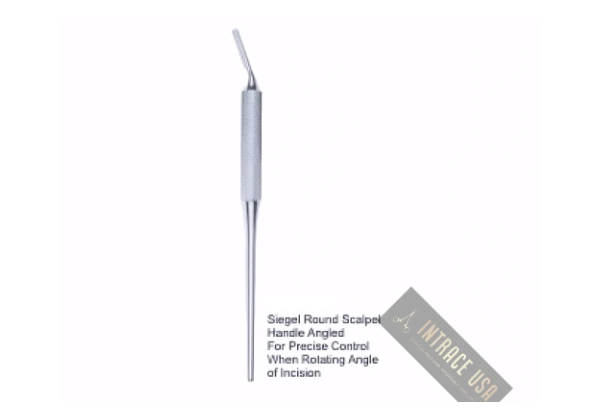
The Siegel round scalpel handle has a round, knurled body instead of a flat one. Because of that shape, you can roll it between your fingers and change the angle of an incision without regripping.
Why a round body
A flat handle holds the blade at one angle to your fingers. In contrast, the Siegel pattern turns freely, which suits curved incisions around teeth, flaps and small lesions. Many periodontists and oral surgeons prefer it for that reason.
Standard or angled
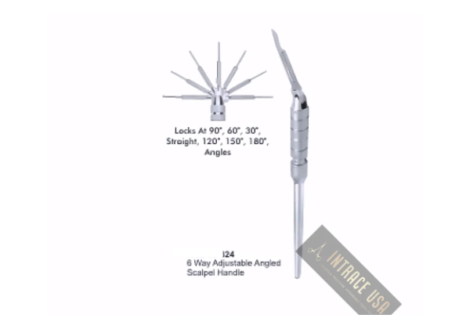
The Standard version runs straight from grip to blade. Meanwhile the Angled version offsets the blade, so it reaches posterior sites more easily. Both take the small blade range, #10 to #15, including the #15C.
Care of the Siegel round scalpel handle
Brush the knurling after every case, because the texture holds debris. Next, clear the blade fitting and check it for wear. Finally, dry the handle before it goes into the sterilizer.
Blades that pair well
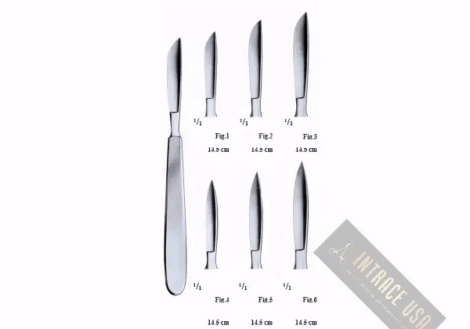
The #15 and #15C blades suit sulcular and flap work in dentistry. Meanwhile, the #12 hooks around tight contours, and the #11 gives a stab point for drainage. Since the handle takes all of these, one handle can cover a full periodontal list. Keep a spare handle loaded with a second shape to save time.
Siegel round scalpel handle details
- Versions: Standard and Angled
- Round, knurled body
- Blade range: #10 to #15, including #15C
- Stainless steel, reusable
Supply and cover
We back the handle with three years against manufacturing defects. Every order passes through Atlanta for a visual check first. Then, for sterilizing notes, head to our FAQs. The FDA lists ASTM F899 for surgical steel, and our full scalpel handle collection shows other patterns.
Good to know
Standard and Angled share a photo, so choose your version with care. Professional use only. The alloy contains nickel; therefore, Intrace USA cannot be liable for reactions to it. See the FDA on metals in medical devices.

Reviews
There are no reviews yet.