




Description
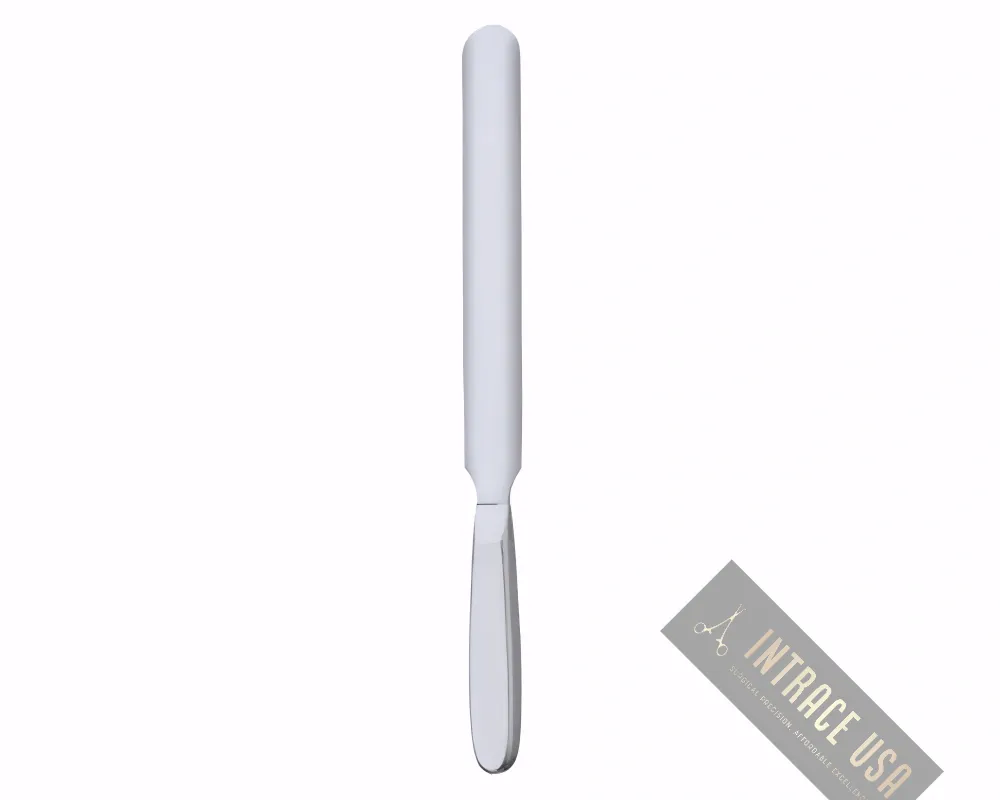
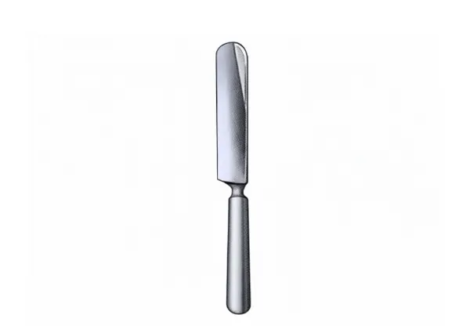
Virchow Brain Knife
The Virchow brain knife has a long, thin blade for cutting the brain into even slices at autopsy. A single long stroke gives a flat cut face, which makes lesions easier to see.
Why a long blade
A short blade needs sawing strokes, and those leave ridges on the cut face. By contrast, a long blade crosses the whole specimen in one pass. As a result, pathologists get clean, parallel sections.
Choosing a blade length
The 152 mm blade suits smaller specimens and teaching work. Meanwhile, the 8 in and 9 in blades span an adult brain. Price rises with length.
Care of the Virchow brain knife
Wipe the blade clean between sections, then wash and dry it after the session. Store it in a guard, because a long thin edge bends and nicks easily.
Getting even slices
Fix the brain well before cutting, because fresh tissue tears under a blade. Then place it on a flat board and cut in one smooth draw from heel to tip. Also, wet the blade lightly between strokes to stop tissue dragging. As a result, each slice keeps an even thickness for examination. In addition, store the knife flat in a drawer or a hanging guard. A long thin blade can bend if other instruments rest on it.
Virchow brain knife blades
- 152 mm
- 8 in
- 9 in
- Stainless steel, reusable
Warranty, inspection and support
This knife has three years against manufacturing defects. Before shipping, we check the full blade in Atlanta for straightness. Our FAQs cover care. Also, ASTM F899 sets the steel standard, and our autopsy and surgical knives include the shorter Virchow pattern.
Before you order
The photo shows one blade length. For professional use. Stainless steel contains nickel, so we take no liability for reactions. The FDA outlines device metals.


Reviews
There are no reviews yet.