




Description
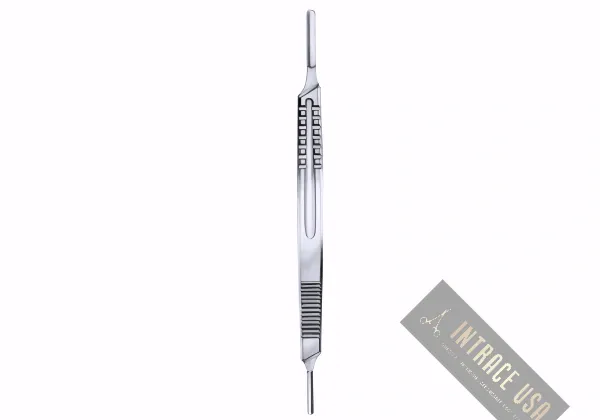
Double Ended Scalpel Handle
The double ended scalpel handle puts a #3 fitting at one end and a #4 fitting at the other. So one instrument carries either the small blades or the large ones.
Two fittings, one handle
The #3 end takes the #10 to #15 blades. Meanwhile, the #4 end takes the #20 to #25 blades. That suits kits where space is short, such as field, veterinary and teaching sets.
Working with the double ended scalpel handle
Load only one blade at a time. Otherwise, the idle blade at the far end becomes a hazard to your palm. Swap ends as the task changes, and use a remover for every change.
Care
Clean both fittings after use, since each one collects debris. Then dry the handle and check both ends before sterilization.
Who chooses a double ended handle
Veterinary clinics, field kits and teaching labs often choose it, because space matters in each. Also, students learn both fittings on one instrument. In a hospital theatre, however, separate #3 and #4 handles remain more common. Pick the handle when a compact kit matters most. Also, remember to store it with no blade loaded. Otherwise, the open fitting at either end could catch a glove or a drape during setup.
Specification
- Length: 15 cm
- One end: #3 fitting, #10 to #15 blades
- Other end: #4 fitting, #20 to #25 blades
- Stainless steel, reusable
Warranty, inspection and support
This handle has three years against manufacturing defects. Also, we check both fittings in Atlanta before it ships. Our FAQs cover cleaning. Meanwhile, ASTM F899 sets the steel standard, and single ended scalpel handles live in the same category.
Before you order
Blades ship separately. Intended for professional users. Stainless steel contains nickel, therefore we take no liability for allergic reactions. Read the FDA page on device materials.


Reviews
There are no reviews yet.