




Description
Probe-Angle Probes
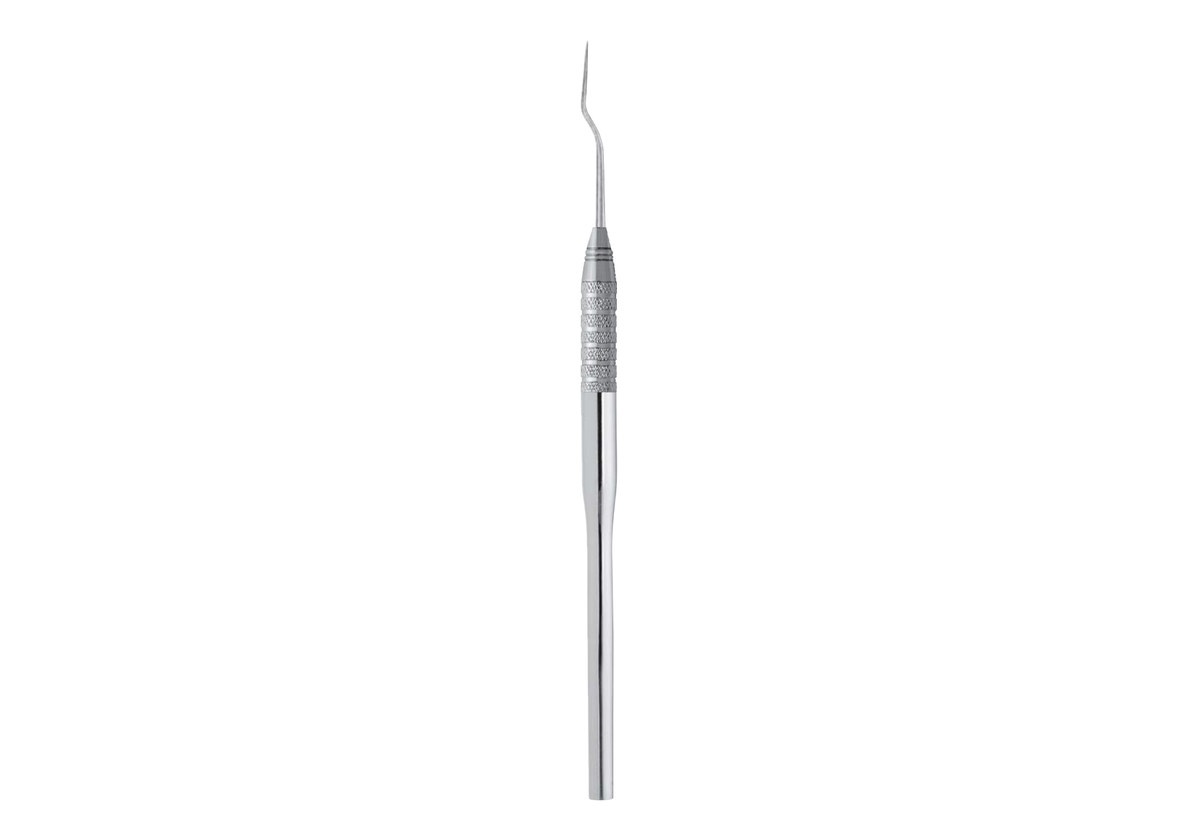
Straight probes work well on anterior teeth, but posterior and distal surfaces often need an offset. The Probe-Angle is an angled dental probe from the same catalogue family as our set components, sold here as a single piece. Intrace USA, a distributor in Atlanta, gives every unit an eye-and-hand check in the United States. Only then does it go into a box.
What the Angle Changes at the Chair
An angled shank lets the tip meet a surface while the handle stays clear of the opposite arch. Because of that, you can reach the distal of a second molar without stretching the cheek too far. In addition, the angle keeps your wrist in a more neutral position during a full-mouth exam. The catalogue does not state the exact bend, so please compare the photos with any probe you already own.
Pairing With a Straight Probe
Many clinicians keep one straight and one angled probe on each tray. First, the straight probe handles labial and lingual surfaces. Then the angled one takes over at the line angles and posterior contacts. That way, each probe works where its geometry suits the site best.
Protecting the Bend
A bent shank carries more leverage than a straight one, so the angle can shift if you pry with it. Therefore, use the angled dental probe only for exploration and measurement. It ships non-sterile. So put the probe through your practice cleaning routine and an autoclave cycle ahead of patient use. For three years against manufacturing defects, the Probe-Angle stays under our warranty from the date you buy it.
Its stainless steel corresponds to ASTM F899. The diagnostic and periodontal instrument category lists more exam tools. You might also add a calibrated Probe UNC 15 for charting pocket depths, or look through our FAQs page.
For trained dental professionals only. Angled probe reprocessing follows our steel care checklist, and transit timelines on our shipping and delivery page.

Reviews
There are no reviews yet.