




Description
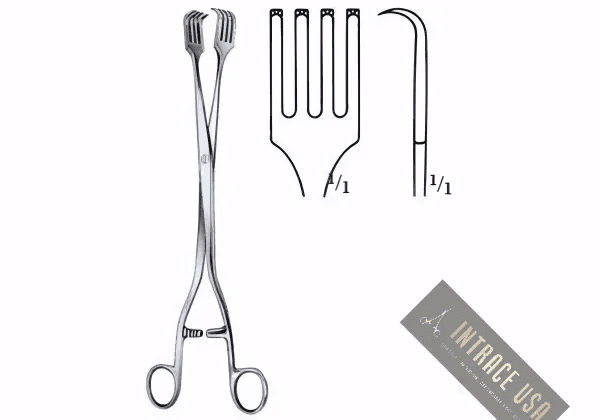
Pratt Tissue & Organ Holding Forceps
The Pratt tissue forceps grasp tissue and organs in rectal and general surgery. At 15 cm, they suit anal and perineal work as well as superficial abdominal tasks.
Size of the Pratt tissue forceps
Fifteen centimetres gives good control in the perineum. Meanwhile, the ratchet keeps the grip steady.
Typical procedures
Colorectal surgeons use them during haemorrhoid and anal procedures. In addition, they hold tissue in pilonidal and perineal surgery.
Jaw grip
The jaws hold mucosa and soft tissue firmly. As a result, the surgeon can lift and excise with precision.
Technique
Clamp the pile or tag that you plan to excise, and pull outward as the scissors work.
On the proctology tray
Pennington forceps and anal retractors often sit beside the Pratt. Together they cover most anal procedures.
A trusted pattern
Many colorectal teams have used Pratt forceps for decades. Consequently, they remain common on proctology sets.
Pratt tissue forceps in haemorrhoid surgery
For a haemorrhoidectomy, the surgeon lifts each pile away from the anal canal before excising it. With the Pratt locked onto the pile, the base becomes visible, so the excision line and the ligature sit exactly where planned.
Pratt tissue forceps details
- 15 cm overall
- Grasping jaws
- Ratchet lock
Pratt care
Brush the jaws and joint. Rinse, dry and sterilise.
Purchase details
A team member in Atlanta examines the forceps by eye before sealing the box. Each Pratt pair carries three years against manufacturing defects. For order basics, scan the FAQs. Visit our complete general surgery catalog to finish the tray. A backup forceps on the shelf keeps lists moving. For the basics of instrument steels, review ASTM F899. It pairs well with the Pennington forceps.
Professional buyers only. Return rules show on our returns page. Product images may differ slightly. Also, this alloy contains nickel; visit the care guidance for details.

Reviews
There are no reviews yet.