




Description
Pennington Tissue & Organ Holding Forceps
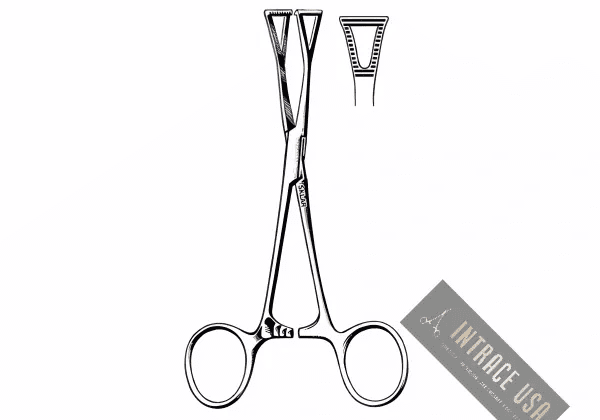
The Pennington forceps grasp tissue gently with triangular jaws. Their open jaw shape spreads pressure, which makes them useful for haemorrhoids, bowel and delicate tissue.
Triangular jaws
The jaws form a triangle with a window. Consequently, tissue sits within the opening and is held without crushing.
Two lengths of the Pennington forceps
We offer 15.5 cm and 20 cm. Furthermore, the shorter one suits anal surgery. Meanwhile, the longer one reaches into the abdomen.
Typical procedures
Colorectal surgeons use them in haemorrhoidectomy to hold the haemorrhoid. They also hold bowel and other soft tissue.
Technique
Place the jaws over the tissue and close to the first ratchet step. Then lift gently while dissecting.
Pratt or Pennington
The Pratt holds firmer tissue, while the Pennington spreads the grip. Many proctology trays carry both.
Gentle traction
Because the grip spreads out, traction feels smooth. As a result, tissue tears less often.
Pennington forceps on bowel
Bowel wall bruises easily when squeezed between narrow jaws. Because the triangular jaw spreads the load across a wide window, the Pennington lifts a loop for inspection or resection with far less marking.
Pennington forceps options
- 15.5 cm or 20 cm
- Triangular fenestrated jaws
- Ratchet lock
Pennington care
Brush through the jaw windows. Rinse, dry and sterilise.
Shipping notes
Before shipment, a colleague in Atlanta views this forceps under good light. Both Pennington lengths have three years against manufacturing defects. For help with an order, check our FAQ section. FDA listings include ASTM F899 for surgical steels. More pieces appear in the general surgery listings. For a companion tool, see the Pratt forceps. Searching for a formal quote? Send us a note.
Only for qualified users. Returns show on the refunds page. Our cleaning guide explains image variation along with the alloy’s nickel.


Reviews
There are no reviews yet.