




Description
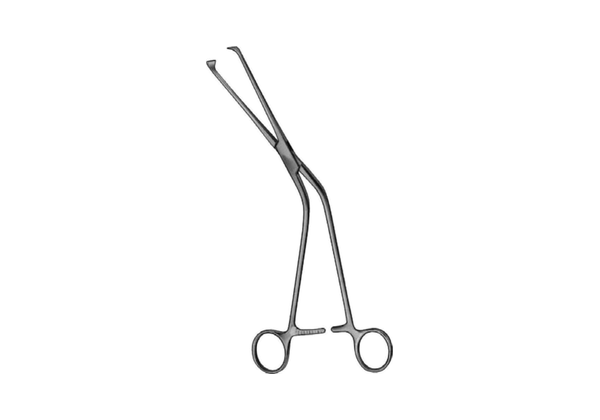
Millin Capsule Forceps, Curved
A ring handled forceps with a long curved shank, used in retropubic prostatectomy to take and hold the prostatic capsule while the enucleation is worked. The curve carries the jaws down into the retropubic space without the handles crowding the field, and the ratchet holds the grip so the assistant is not fighting the tissue.
Jaw options
- Smooth jaws. The standard pattern. Even pressure across the bite and least marking of the capsule.
- Atraumatic toothed jaws. Fine interlocking teeth for a more certain hold where the capsule is slippery or has already been handled.
Why the curve matters
A straight forceps in the same role puts the handles in the line of sight. The Millin curve moves them clear, which is the reason the pattern survives alongside simpler instruments. Two lengths are stocked so the shank can be matched to the depth of the field.
Care
Open the ratchet fully before reprocessing so the box joint and rack are exposed. Brush the serrations along their length rather than across, rinse until the water runs clear, and dry before storage. Store with the ratchet released, since leaving it closed holds tension in the spring and shortens the life of the joint.
Specification
- Curved shank, ring handles, ratchet lock
- Lengths: 23 cm and 25 cm
- Jaws: smooth or atraumatic toothed
- Material: surgical stainless steel
- Reusable, autoclavable, supplied non sterile
Warranty and supply
Three years of cover against defects in manufacture, counted from the invoice date. Stock is inspected in Atlanta before it ships. See our FAQs for care guidance, or browse the rest of our urology surgical instruments.
Background on prostate surgery is published by the American Urological Association.
Disclaimer
Catalog photographs are reference images and may show more than one size or variation, so check the option you have selected before ordering. This is a professional use product. Surgical stainless steel contains nickel, and Intrace USA cannot accept liability for allergic or material sensitivity reactions. See the FDA guidance on materials used in medical devices.

Reviews
There are no reviews yet.