
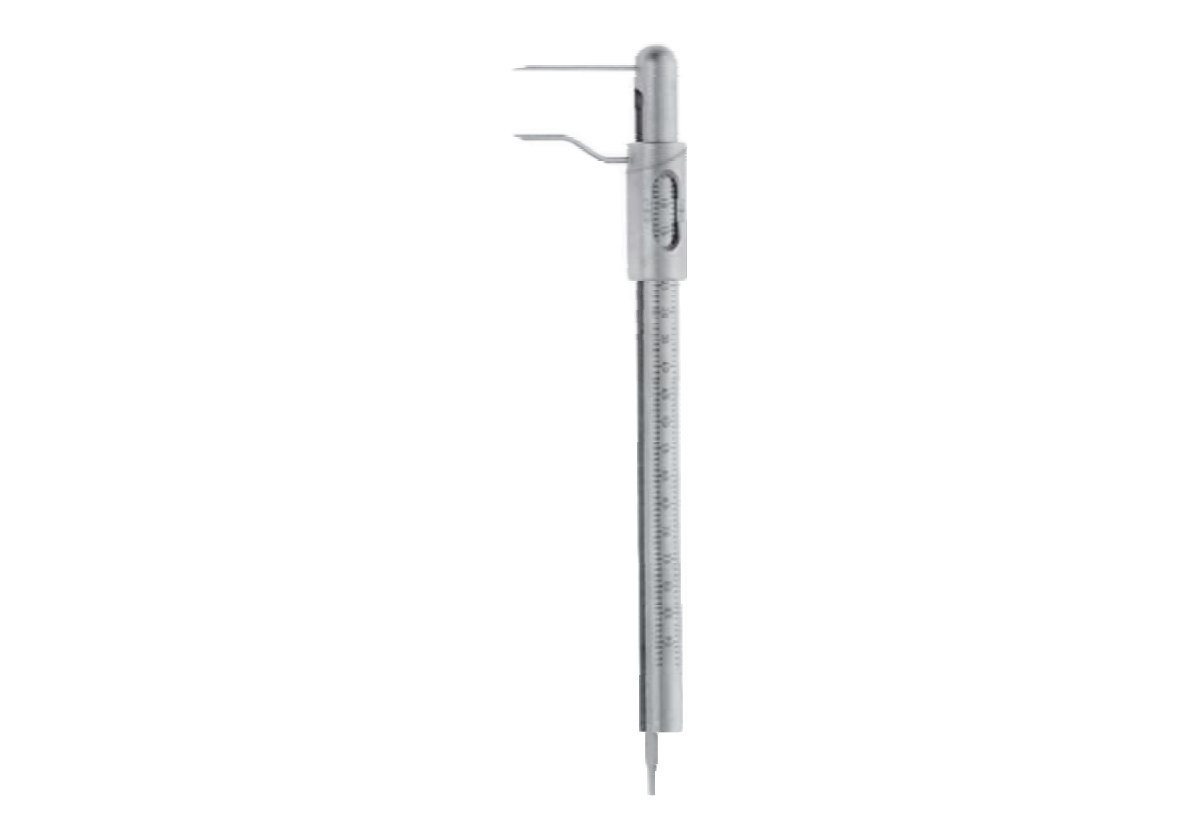




Description
Measuring Gauge
Short calipers cover a single tooth space, but some measurements run much longer. This dental measuring gauge reads from 0 to 10 cm, according to the supplier catalogue. It belongs to the same caliper group as the Castroviejo patterns. However, its range suits arch-length and multi-implant work. There is one model on this page.
What a 10 cm Range Lets You Measure
With ten centimetres available, you can span a full quadrant in one reading. For example, the team can check the distance between the outer implants of an arch plan. It also measures the length of a harvested block before trimming. In addition, it helps confirm prosthetic spacing on models in the lab.
Gauge or Caliper: Which One to Grab
For ridge width and a single gap, a 20 mm or 40 mm caliper is quicker to read. In contrast, this gauge takes over when the span exceeds those scales. Many practices keep both, because they answer different planning questions. So think about the longest distance you measure each week.
Getting Reliable Readings
Hold the gauge parallel to the structure you measure. Then read the scale straight on rather than from an angle. If blood obscures the markings, wipe the instrument and repeat. Recording each value right away avoids confusion later in the case.
Material, Review and Guarantee
The gauge is stainless steel. Before it ships, our Atlanta team checks the scale markings in the United States. Because it is sent unsterile, wash the markings carefully and sterilize the gauge before patient contact. Any 10 cm gauge with a production flaw is backed for three years against manufacturing defects.
Steel for this tool meets ASTM F899 surgical guidance. Browse more planning tools in Dental Implant Instruments. For shorter spans, consider the Castroviejo Bone Calipers. See the FAQs for ordering help.
Sold for use by trained dental professionals. Our sterilization guide and shipping and delivery page cover handling and dispatch.

Reviews
There are no reviews yet.