




Description
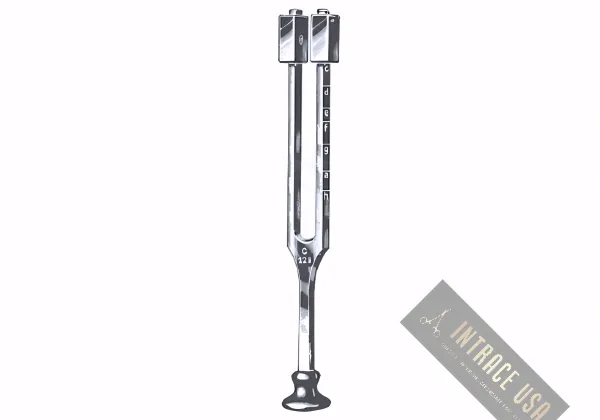
Lucae Tuning Fork
A Lucae tuning fork is recognizable by the round foot at the base of its stem. Because the foot spreads the contact, you can set the Lucae tuning fork firmly on the mastoid or the forehead and get a clean bone conduction signal.
Air and bone conduction with one fork
First, hold the prongs beside the ear to test air conduction. Then place the foot on the mastoid to compare bone conduction, as in the Rinne test. Similarly, the foot sits well on the midline of the forehead for the Weber test. So one fork covers the classic bedside hearing screen.
Pitch of the Lucae tuning fork
The Lucae pattern appears in the manufacturer’s catalogue in pitches from 128 Hz to 4096 Hz. However, this listing has a single option and does not name the pitch, so please contact us before you order and tell us the frequency you need. For most hearing tests, 512 Hz is the usual choice.
Care
Wipe the foot after each patient, because it touches the skin directly. Strike the prongs only on something soft, such as the heel of your hand. Otherwise, a hard knock can bend them out of tune.
Lucae tuning fork specification
- Round foot for bone contact
- Plain prongs
- Pitch: confirm with us when ordering
- Reusable, supplied non sterile
Warranty and supply
Every instrument carries a three year warranty against defects in manufacture, counted from the invoice date. Before an order ships, we inspect it in Atlanta. Also, for cleaning and sterilizing questions, see our FAQs, or browse the rest of our diagnostic medical instruments.
Disclaimer
Catalog photographs are reference images and may show more than one size or version, so check the option you select before ordering. This is a professional use product. Metal instruments may contain nickel, so Intrace USA cannot accept liability for allergic or material sensitivity reactions. See the FDA guidance on materials used in medical devices.

Reviews
There are no reviews yet.