




Description
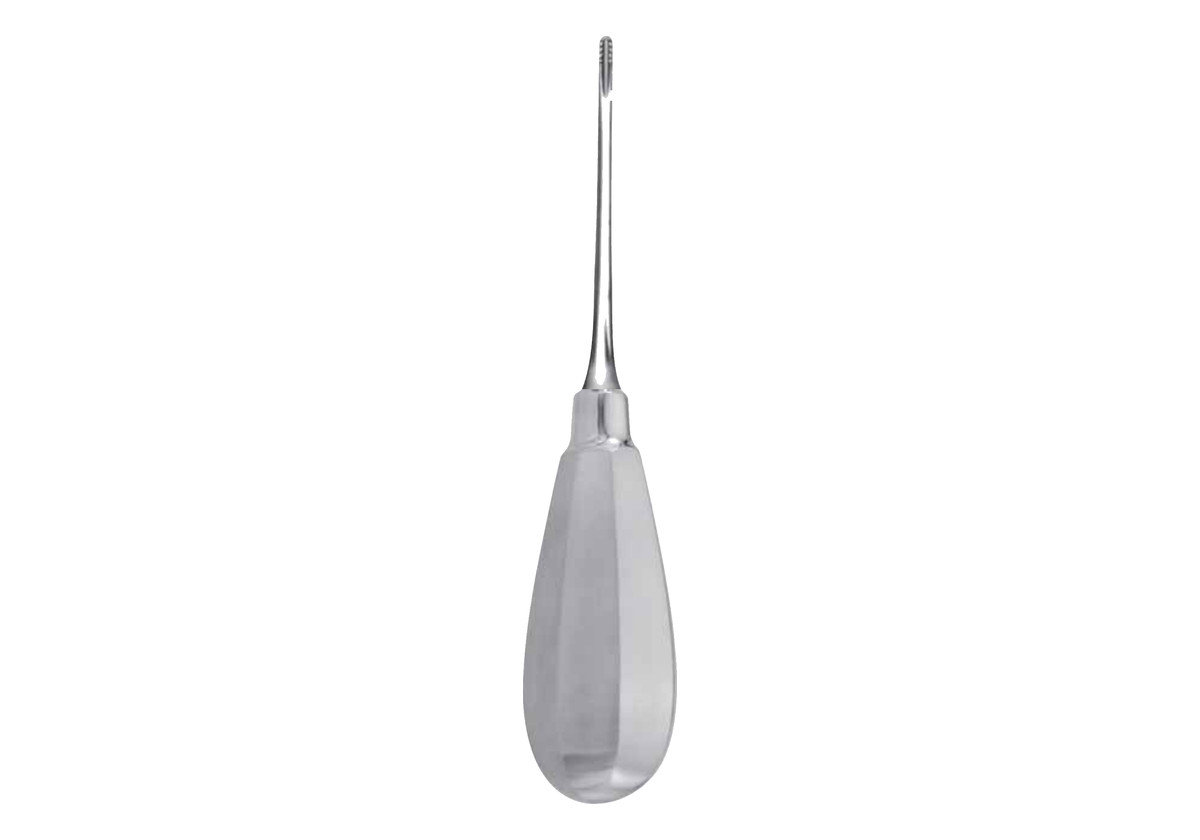
Lindo-Levian Root Elevators
The Lindo-Levian root elevators on this page number three, labelled Fig. 1, Fig. 2 and Fig. 3. They join our long list of eponym patterns, and each figure sells on its own. Below we cover blade size in general and how to choose a figure.
Fine Blades Versus Broad Blades
A fine blade slips into a narrow PDL space with little force. For that reason, it suits small or thin roots and tight front sites. A broad blade, on the other hand, shares the load across more root surface. So it often helps with larger roots once the space has opened. These are general points, not a guide to any one figure.
Selecting From Three Figures
- Fig. 1: the first Lindo-Levian figure.
- Fig. 2: the second figure.
- Fig. 3: the third figure.
Try each figure on a model first. Then decide which ones belong on your tray. Also, note your choice so the team can reorder the same figure.
Weighing It Against MacMillan
Many clinicians compare this family with other eponym elevators. For example, the MacMillan group also has three figures. Hold both in your hand, because feel often settles the choice faster than a chart.
Clinical Basics for Elevation
Start in the ligament gap; wedge, rotate and pause, all with care. Keep a firm finger rest. Moreover, never lever on a neighbor unless it is also coming out. If an implant may follow, protect the buccal plate.
Buying Lindo-Levian Figures
The stainless steel matches ASTM F899 for surgical tools. We specify the build of each figure, and staff check it in the United States. It leaves our hands non-sterile, and then cleaning and sterilisation make it ready for reuse. Every figure carries our backing of three years against manufacturing defects. Explore dental root elevators, see the MacMillan root elevators, or check common questions on orders.
For professional use. Our sterilisation page and shipping page explain care and delivery.
Reviews
There are no reviews yet.