





Description
Knapp-Rollet Hook
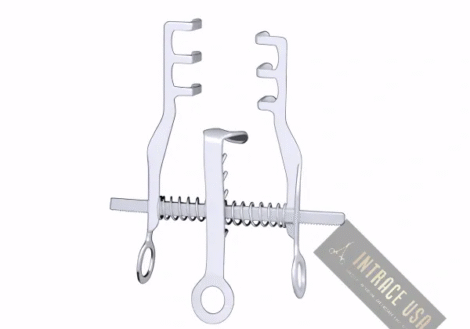
A knapp-rollet hook uses several prongs to hold back skin and soft tissue. You can pick 2 prongs, 3 prongs or 4 prongs, or a flexible option. That range lets you set the width of your hold for each case.
Prong count and tissue width
More prongs spread the pull over a wider edge. So the 4-prong hook suits a broad wound edge, while the 2-prong hook gives a narrow, precise hold. Meanwhile, the 3-prong version sits in the middle and covers many routine needs. If you buy only one, the 3-prong is a sensible start.
Where a Knapp-Rollet helps
Pronged hooks like this often show up in lid and lacrimal sac work. They hold the skin and tissue edges apart while you dissect below. Because the pull spreads across the prongs, the tissue is less likely to tear than with a single hook.
The flexible Knapp-Rollet option
We also list a flexible version. Some surgeons prefer a hook with a little give rather than a rigid hold. If you are not sure which style fits your technique, ask us before you order. We can talk through the options.
Prong options in brief
- 2 prongs: narrow, precise hold
- 3 prongs: a good all-round choice
- 4 prongs: widest spread of pull
- Flexible: for those who prefer some give
Knapp-Rollet care, prongs first
Prongs trap tissue, so scrub between them with a nylon brush while the hook sits in a basin of water. Then dry each hook well. These hooks leave us non-sterile, so process them before the first case. Every Knapp-Rollet prong set carries three years against manufacturing defects on Knapp-Rollet steel. That steel meets ASTM F899. See our eye surgery retractor range or the Knapp four-prong hook. Our FAQ page has more.
For professional surgical use only. Read our pronged hook cleaning page and Knapp-Rollet delivery notes.

Reviews
There are no reviews yet.