




Description
Kerrison Bone Rongeurs
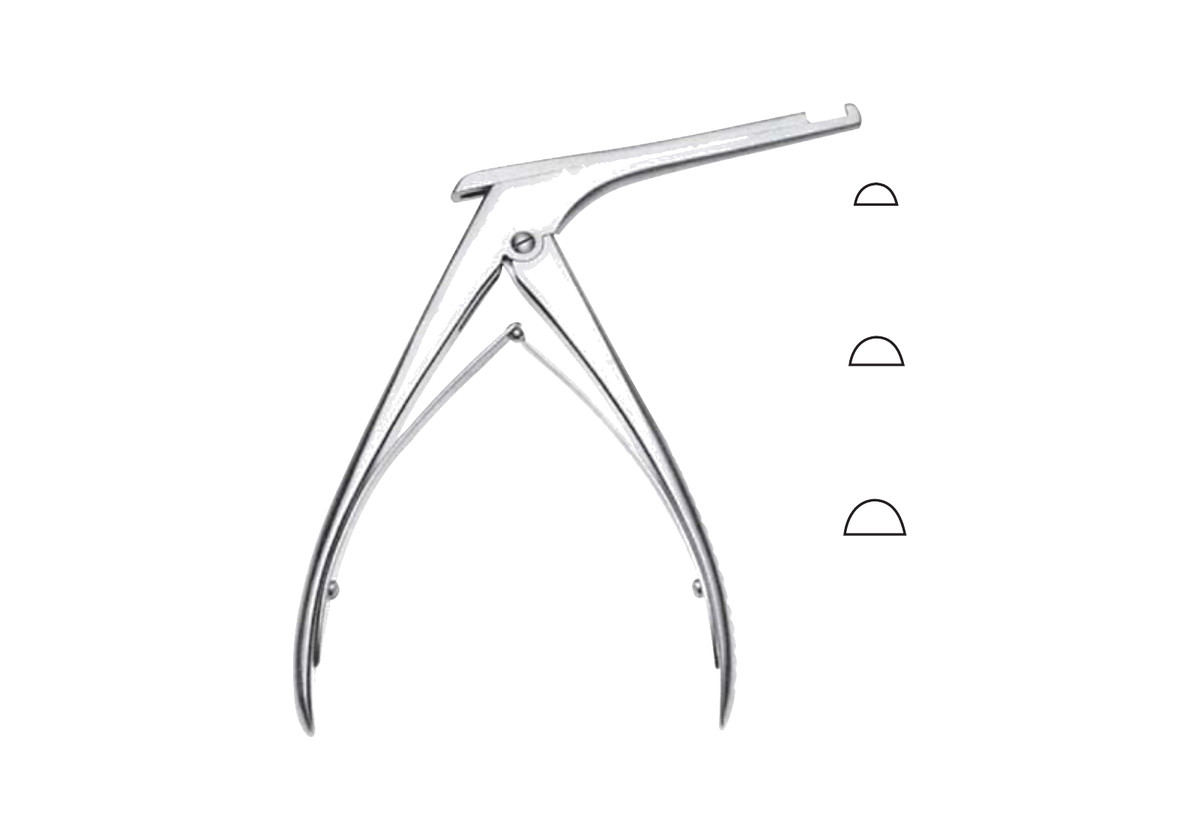
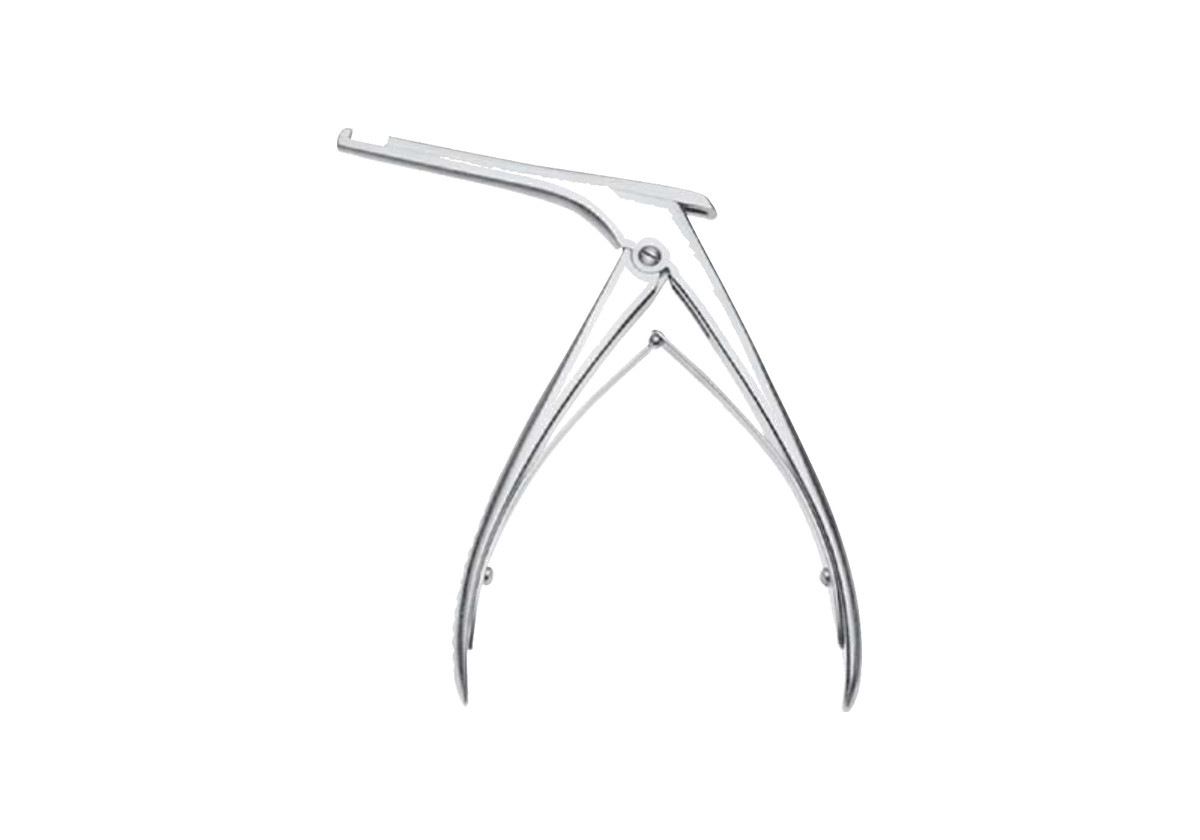
The Kerrison bone rongeurs are punches rather than nippers. A flat footplate slides underneath the edge of the bone you want gone, and the cutting head then comes down onto that plate. The bite is therefore taken from below, with the plate sitting between the cut and whatever lies beneath it.
Why the footplate makes the Kerrison bone rongeurs different
That footplate is the whole reason to pick this pattern over a cupped rongeur. It goes in first, you feel it seat, and nothing underneath it is in the path of the cut. A plier-style rongeur offers no such stop, because it closes from both sides at once and the far jaw ends up wherever you left it. Consequently the Kerrison is what you reach for when the bone you are removing sits on top of something you would rather not disturb.
Bite width is the choice you make
Three of the four share the same 15 cm body, while the 4 mm runs a longer 10 cm beak for deeper reach. What changes otherwise is the width of the punch, and so how much bone comes away with each bite.
- 2 mm, the finest, for working close to something you mean to preserve
- 3 mm, the general width, and the one most sets carry
- 4 mm, on a 10 cm beak, where the bone sits deeper than a short body will reach
- 5 mm, for taking bone down quickly where there is room to do it
Narrow is slower but more forgiving; wide is faster and less so. Many trays therefore carry two widths rather than one.
Key features
- Flat footplate that passes under the bone ahead of the cut
- Slim 15 cm body, keeping the hand clear of a narrow approach
- Sprung handle that returns the punch after every bite
- Thumb lever above the joint for controlled one-handed work
- Stainless steel, and autoclavable
Where it is used
In dentistry the Kerrison bone rongeurs belong to oral and maxillofacial surgery: antral work, taking bone off an impacted tooth, opening a window and enlarging it without loading the structure underneath. Beyond dentistry the same principle is standard in sinus and spinal surgery, for exactly the reason above.
Care
The sliding channel fails first. Bone debris packs into the track behind the punch, and once it sets the action stiffens and then jams. So flush the shaft straight away, brush along the slide rather than across it, and check that the punch returns fully under its own spring before the instrument goes back in the set. Afterwards look at the footplate edge, since a bent or burred plate will no longer pass cleanly under bone.
Warranty
We warrant each punch three years against manufacturing defects.

Reviews
There are no reviews yet.