




Description
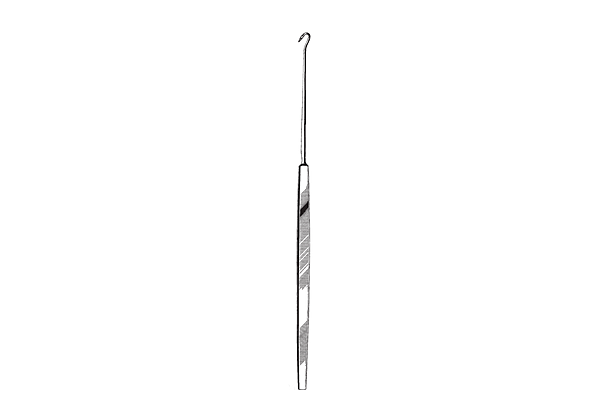
Hessberg Ligature Needle
Our Hessberg ligature needle gives you 15 cm of reach and an eyed, curved point. You thread it, pass it around the tissue, and draw the suture through. Because the handle is fixed, the curve stays where you aim it.
A Little More Reach
At 15 cm, this needle is slightly longer than many ligature patterns. So it suits cases where the target sits deeper, or where you want your hand further back from the face.
Steps for Passing a Ligature
Load the suture through the eye. Then guide the point around the structure in one arc. On the far side, catch the thread with forceps.
- Load the eye before you start
- Pass the curve in a single sweep
- Grasp the thread on the far side
- Back the needle out along its path
Hessberg Handling Tips
Hold the handle like a pencil for fine control. However, switch to a palm grip if the tissue resists, because it gives more steady force. Also rotate your wrist with the curve, rather than pushing straight.
Choosing Between Ligature Needles
Ligature needles differ mainly in length and curve. The Hessberg is a good default when you need depth. But if you prefer a shorter tool, look at a 14 cm pattern, or a left and right pair for side-specific work.
Caring for the Hessberg Point
Rinse the eye right after use, then clean it with a fine brush or wire. Next, dry the needle fully. A dull or bent point drags tissue, so replace it when you notice that.
No Hessberg needle leaves us sterile, so sterilize it before first use; it then serves repeatedly. Its stainless steel matches ASTM F899, and we check every batch in the United States against our own spec. Coverage lasts three years against manufacturing defects. If you work on one side at a time, compare the De La Roza left and right needles. Our ophthalmology range has more, and the help center answers order questions.
For licensed professionals. Use our cleaning and sterilizing guide, and check delivery information before you buy.



Reviews
There are no reviews yet.