




Description
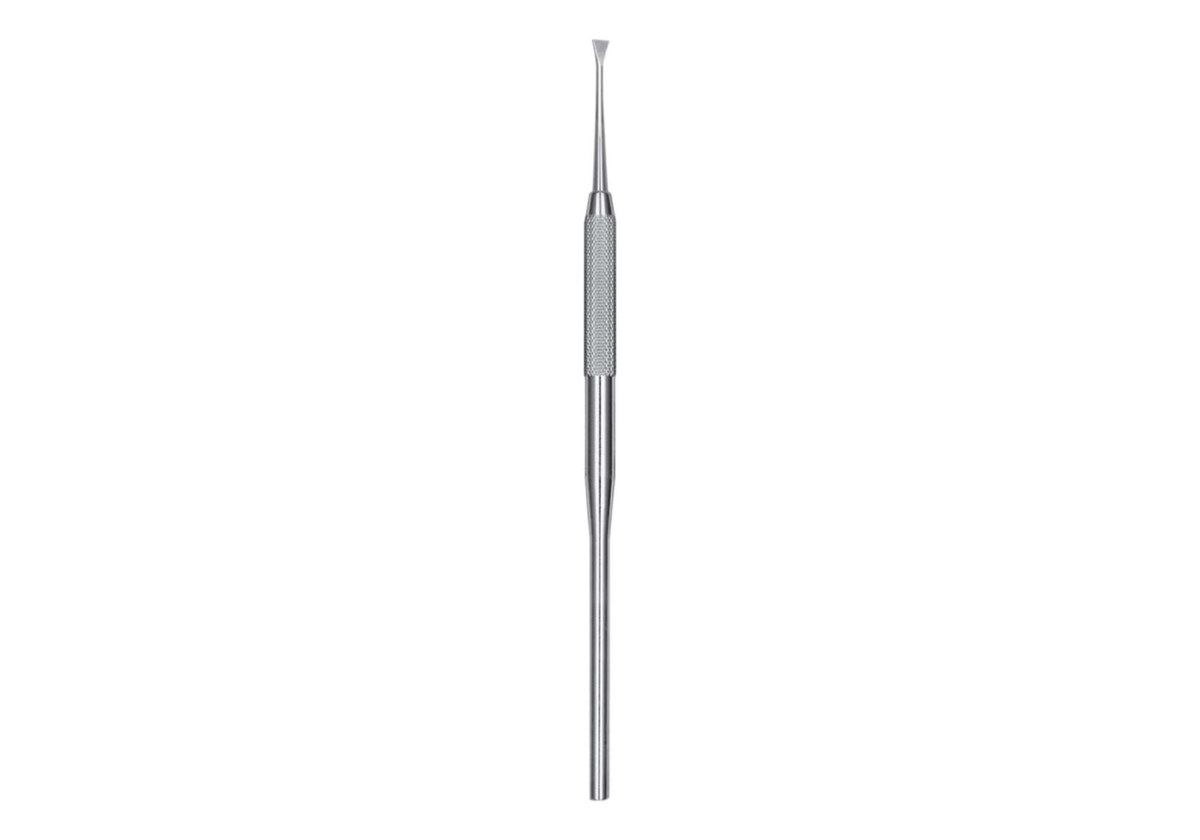
Edentulous Ridge Chisel
An edentulous ridge chisel is made for bone that no longer supports teeth. After extraction and healing, a ridge can be sharp, uneven or narrow at the top. This chisel helps you level and contour that crest before drilling. It is one pattern, sold singly.
Why Toothless Ridges Need Their Own Chisel
Chisels designed for work around teeth must avoid roots. On a healed ridge, however, there are no roots in the way. So you can work along the full length of the crest with steady strokes. The catalogue lists this pattern on the same page as the Kramer-Nevins chisels and periosteal elevator. That grouping shows its role in ridge preparation.
Flattening a Knife-Edge Crest
A thin, sharp crest leaves little room for a fixture. Reducing it slightly often exposes a wider platform below. First, reflect the flap fully. Next, take shallow passes along the ridge rather than deep cuts. Finally, check the width with a gauge before you start the osteotomy.
Hand Pressure or Light Mallet Taps
Some surgeons push this chisel by hand for fine control. Others tap it lightly with a mallet when the bone is dense. Either way, keep the blade angle shallow so it shaves bone rather than digging in. Compare the product photo to judge the blade before you order.
The chisel uses stainless steel meeting ASTM F899. It is also examined in the United States, with attention to the cutting edge, before shipment. This ridge chisel includes three years against manufacturing defects covering its blade, shank and grip. See Dental Implant Instruments for related tools, and pair it with the Kramer-Nevins Bone Chisel from the same catalogue group. Return details are in the FAQs.
Intended for licensed implant and oral surgery professionals. The chisel comes non-sterile, so sterilize it according to our care and sterilization page beforehand. For shipping estimates, see Shipping and Delivery.

Reviews
There are no reviews yet.