




Description
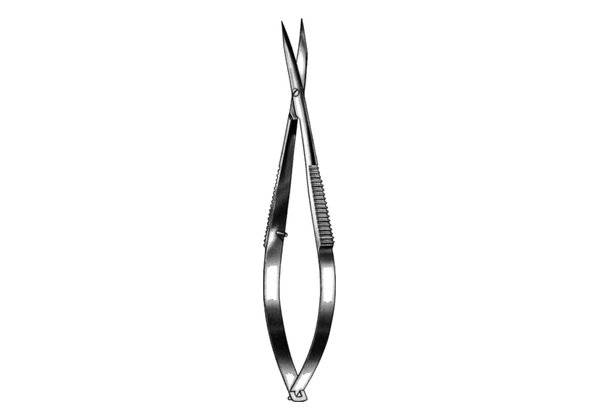
Westcott Micro Scissors
Westcott micro scissors use a spring handle and fine blades for delicate dissection. This pair measures 11.5 cm. Pick curved or straight blades to suit how you cut. Also, the light spring suits long lists, since the hand tires less.
Westcott Spring Action Basics
There are no finger rings. Instead, you squeeze the handle and the blades close. Ease your grip and the spring parts them. That short stroke gives small, controlled snips.
Picking a Blade Curve
Curved blades follow the globe, so they suit conjunctival and Tenon’s work around the limbus. Straight blades, by contrast, cut along a direct line and feel more predictable for beginners. Often a tray holds both.
Typical Westcott Work
In general, surgeons use Westcott-type scissors to open conjunctiva, dissect Tenon’s capsule and trim fine tissue. They also appear in strabismus and glaucoma surgery.
- 11.5 cm length
- Spring handle for small snips
- Curved blades to follow the globe
- Straight blades for direct cuts
Holding a Westcott Well
Hold the scissors like a pencil, with the handle resting on the web of your thumb. Then cut with the tips only. Because the blades are fine, never use them on suture or heavy tissue.
Care for Westcott Blades
Rinse the blades right after use. Next, open them and brush the joint area. After drying, check that the tips meet and cut cleanly. Finally, store them closed in a rack.
Westcott micro scissors from us ship non-sterile; a proper wash and sterilization cycle readies them each time. The stainless steel follows ASTM F899, and we inspect each pair in the United States. Either blade shape keeps three years against manufacturing defects in force. For a version with tip and side choices, see the Westcott tenotomy scissors. Browse our ophthalmic scissors and tools, or read the FAQ.
Intended for professionals. Our scissor care steps and delivery page explain more.


Reviews
There are no reviews yet.