




Description
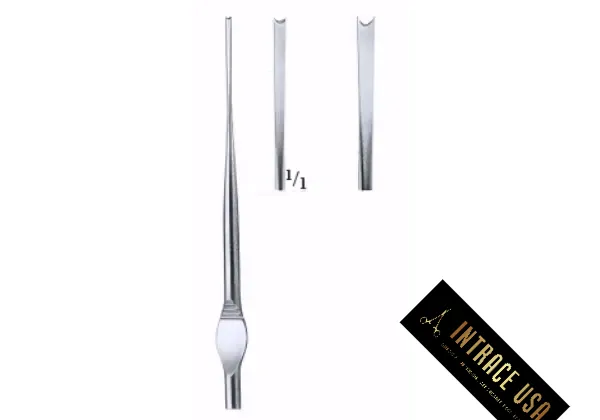
Walter Osteotome
The Walter osteotome offers five blade widths for rhinoplasty. With each mallet tap, the blade advances along the planned osteotomy line.
Five widths
We list five blade sizes: 3, 4, 7, 9 and 12 mm. The narrow blades handle fine lateral cuts. Meanwhile, the wider ones suit larger bony steps along the dorsum.
How the blade behaves
An osteotome has two bevels, so it tends to keep a straight path through bone. As a result, the surgeon can follow a planned line with each tap. That makes osteotomes a core part of most rhinoplasty sets.
Using it in rhinoplasty
First, the surgeon plans where the nasal bones should move. Next, osteotomes make the cuts that allow that movement. Finally, the surgeon shapes the bones into their new position.
Which widths to buy
Start with the widths your surgeons already ask for. Also consider adding one narrow and one broad blade to cover unusual cases. If you want help, email us your current list.
Caring for your Walter osteotome
Clean the blade by hand to protect its edge. Rinse thoroughly, then dry each part before storage. Last, sterilize it in a rack that holds the edges apart.
Walter osteotome specifications
- Widths offered: 3, 4, 7, 9 or 12 mm
- Nasal osteotome for mallet use
- Stainless steel
Ordering and inspection of five widths
All five widths carry three-year warranty cover for workmanship defects. Before shipping, our Atlanta team looks at every 3 to 12 mm blade by hand. Our FAQ help page answers questions on orders and delivery. ASTM F899 is the recognized standard for osteotome steel and other surgical instrument steel. For removing bone with a curved blade, see the Walter gouge. Then view our complete range of ENT instruments.
Five-width osteotomes are for professional use. Read our notes on care and sterilization for details on osteotome photos and the nickel present in the alloy, while our returns and refunds details cover returns.


Reviews
There are no reviews yet.