




Description
Trephine
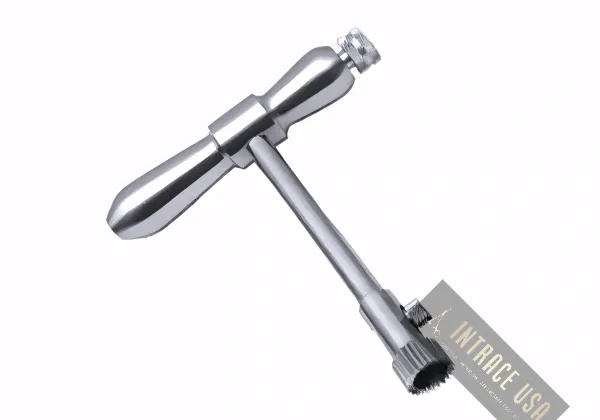
This skin trephine cuts a neat cylinder of tissue with a circular blade. Twisting pressure carries it through the skin in one smooth motion.
Six diameters to choose from
We offer 2, 4, 6, 8, 10 and 12 mm. Also, the small end suits diagnostic biopsies. Meanwhile, 10 and 12 mm remove larger lesions or create round defects for grafting.
How the skin trephine differs from a Keyes punch
The Keyes pattern stops at 8 mm. Additionally, this pattern goes up to 12 mm. Therefore, it covers larger lesions without switching to a scalpel.
Clinical uses of a skin trephine
Dermatology, plastic surgery and minor surgery clinics use it. It also helps prepare recipient sites for small grafts. In addition, most clinics keep two or three sizes ready.
Tips for a clean core
Steady the skin with your free hand. Rotate in one direction with firm, even pressure. Then lift the core gently so the base does not tear.
Skin trephine diameters
- 2, 4, 6, 8, 10 and 12 mm
- Circular cutting edge
- Hand-held, single use per patient before reprocessing
Care of the cutting edge
Rinse and brush inside the barrel after each case. Dry fully before sterilising. Also, check the rim for nicks under a lamp.
Cover and inspection
Any trephine receives a visual once-over at our Atlanta base prior to packing. The trephine includes our promise for three years against manufacturing defects from day one. For a next step, view the Keyes punch. Looking for help choosing a trephine? Drop us a line by email. Other patterns appear in our general surgery listings. To learn about steels for surgery, read ASTM F899. With a general query, browse the FAQ list.
For hospital and clinic use. Transit times appear on our delivery page. The care guidance describes image variation plus the alloy’s nickel.

Reviews
There are no reviews yet.