




Description
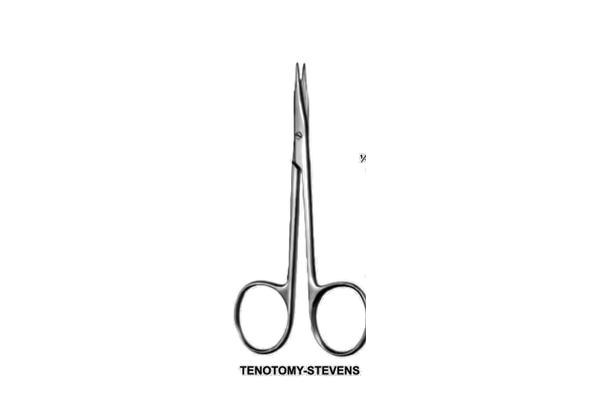
Tenotomy-Stevens Scissors
Tenotomy-Stevens scissors are slim, ring-handled scissors for fine dissection. Eye surgeons often use them in strabismus work. Four sets of options let you build the pair you want.
Blunt or sharp tips
Blunt/blunt tips push tissue aside without piercing it. So they suit spreading and freeing layers around the muscles. Sharp/sharp tips, by contrast, start a cut at a precise point. Many trays carry one of each.
Curved or straight blades
Curved blades follow the round shape of the globe. They also let you see the tips as you cut. Straight blades give a simple, direct cut. Then again, straight pairs are easier to keep track of on a busy tray.
Lengths and edge types
Pick a length and edge to finish the set.
- 10.5cm: close, precise work.
- 11.5cm: a common middle length.
- 14.5cm: added reach for deeper areas.
- SuperCut: a finer, sharper edge for clean cuts.
Typical cases
Strabismus surgery often calls for these scissors. For example, they may free Tenon’s layer or cut near the muscle. Other surgeons use them for fine soft tissue work on the lid. In general, they suit any fine, controlled dissection.
Holding ring-handled scissors
Slip thumb and ring finger through the rings, with your index finger near the pivot. This grip gives a smooth, even cut. Also, it lets you spread the blades with care when you use blunt tips to open tissue planes. With practice, the motion feels natural and steady.
Your Stevens order
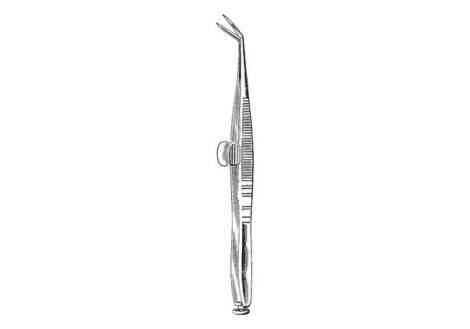
Stevens pairs reach you non-sterile, so run them through cleaning and sterilization before use, then reuse them freely. Stevens scissors enjoy three years against manufacturing defects whatever options you pick. Their steel follows ASTM F899. For a spring-type option, see the Castroviejo tenotomy scissors. Also explore our strabismus and eye tools or read the FAQ section.
Stevens scissors are for professionals. Review our care steps for scissors and delivery terms.


Reviews
There are no reviews yet.