




Description
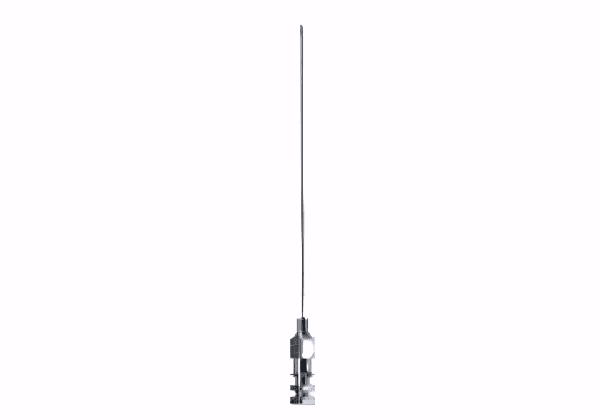
Quinke Biopsy Needle
The Quincke needle has a sharp, beveled cutting point and comes with a stylet. Clinicians use it for punctures and for aspiration of fluid.
Quincke needle: quincke point
The bevel cuts cleanly as it enters tissue. So the point passes with a light, controlled push. Also, you may see it spelled Quinke on our site, but the pattern stays the same.
The stylet
The stylet fills the lumen while you insert the shaft. That way, tissue stays out of the bore until you reach the target. Then you withdraw the stylet and attach a syringe to aspirate.
Diameters and lengths
Pick 0.7, 1.0 or 1.2 mm to set the bore. Meanwhile, the 76 mm and 89 mm lengths set the reach. Therefore, you can match both choices to the depth and the fluid you expect.
Picking a size
A finer Quincke needle makes a smaller entry point in the skin or tissue. However, a wider bore draws thicker fluid more easily. Because both factors matter, many teams keep more than one size in stock.
Reprocessing Quincke needle
Remove the stylet and flush the lumen at once. Next, wipe the bevel with care, since the point cuts easily through gloves. Finally, dry both parts, refit the stylet, and store the instrument with the tip covered.
Quincke needle specifications
- Diameter: 0.7, 1.0 or 1.2 mm
- Length: 76 or 89 mm
- Sharp beveled cutting point
- Supplied with stylet
Support after you buy
We stand behind this instrument with a three-year manufacturing warranty. Also, we check each piece in Atlanta before shipping. Questions about sterilization? Our FAQs can help. Also, ASTM F899 covers surgical instrument steels. For a curved Huber tip, see our Tuohy biopsy needle. You can also browse all our gynecology and obstetrics instruments.
Professional use only. Our care and sterilization guide covers images and the nickel in stainless steel; delivery times are in our shipping policy.


Reviews
There are no reviews yet.