




Description
Parametrium Scissors
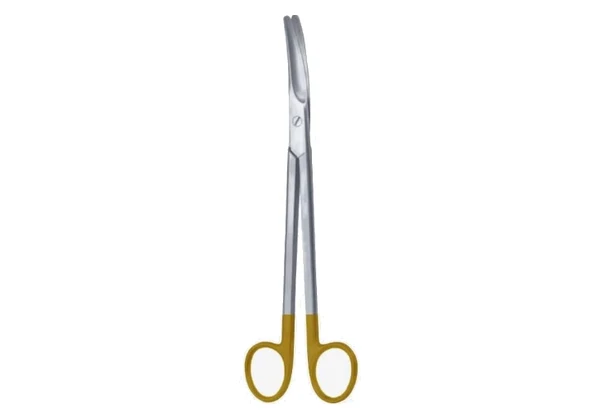
These parametrium scissors have tungsten carbide edges and come in two curves: slight or strong. Surgeons use them to divide parametrial tissue during hysterectomy. Choose the curve that fits the depth of the step.
Dividing the parametrium
The parametrium holds the uterus in place at its sides. So the surgeon must cut it cleanly to free the uterus during hysterectomy. A dedicated pair keeps that step efficient.
Slight curve
The slight curve lets the blades follow tissue planes without turning the wrist much. It also keeps the tips easy to see, which suits steps nearer the surface. This version measures 23 cm.
Strong curve
The strong curve brings the tips around structures low in the pelvis. So the surgeon can see the cut while the hand stays out of the way. This version measures about 22.5 cm, and the curve supplies the extra reach.
Tungsten carbide edges
The carbide inserts stay sharp longer than plain steel. Then the scissors cut through firm connective tissue with less effort and need fewer trips to a sharpening service.
Cleaning parametrium scissors
Carry the scissors by the shanks, not the tips. Open them wide and rinse the joint thoroughly, paying attention to the inner curve where debris gathers. Then dry them, lubricate the joint and store them in a slotted rack or with tip guards.
Parametrium scissors specifications
- Curve: slight or strong
- Length: 23 cm (slight curve), about 22.5 cm (strong curve)
- Tungsten carbide edges
- Use: dividing parametrial tissue in hysterectomy
Ordering from Intrace USA
A three-year warranty protects these parametrium scissors against manufacturing defects, and we check each piece in Atlanta before shipping. Questions about sterilization? Our FAQs can help. ASTM F899 covers surgical instrument steels. You can also browse all our gynecology and obstetrics instruments.



Reviews
There are no reviews yet.