





Description
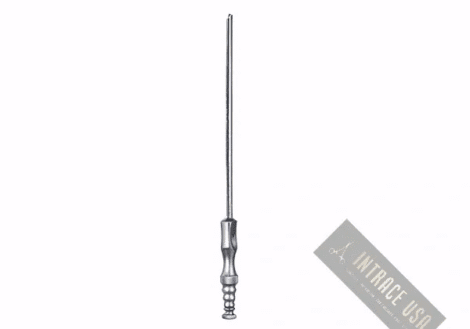
Landolt-Reulen Raspatory, Rigid
The Landolt-Reulen raspatory is a rigid elevator for transsphenoidal surgery. Surgeons use it to lift mucosa and soft tissue from bone along the approach to the sella.
What a raspatory does
A raspatory, also called a periosteal elevator, separates tissue from bone. So in pituitary surgery it helps free the mucosa from the septum and the sphenoid. As a result, the surgeon can open the bony corridor while preserving the tissue.
Two tip widths
We offer the Landolt-Reulen raspatory at 25 cm with a 2.2 mm or a 3.2 mm tip. The narrow tip suits tight spots. Meanwhile, the wider tip clears a larger area with each stroke.
In the approach
First, the surgeon incises the mucosa. Next, the raspatory elevates it from the bone. Then the bone can come away safely. Finally, the team moves on to the sella with curettes and dissectors.
Choosing a width
If you only want one, the 2.2 mm tip covers more tight spaces. However, many surgeons like the speed of the 3.2 mm tip. Therefore ordering both gives the most flexibility.
Caring for your Landolt-Reulen raspatory
Clean the tip edge promptly, because tissue sticks to it. Then brush and rinse the full shaft. After that, dry it, check the edge, and sterilize it.
Landolt-Reulen raspatory specifications
- Rigid pattern, 25 cm
- Tip width: 2.2 mm or 3.2 mm
- For elevating mucosa and tissue
- Stainless steel
Placing the order
Both widths come with a three-year warranty that deals with workmanship defects. In addition, each raspatory gets a hand check in Atlanta before we send it. The FAQ portal explains ordering. Our listings cite ASTM F899, the specification for stainless steels in surgical instruments. For a larger elevator, see the Yasargil raspatory. Also, visit our neurosurgery category page.
For professional use. Our care guidance explains why photos can differ and why steel includes nickel, and the returns page for customers explains exchanges.


Reviews
There are no reviews yet.