




Description
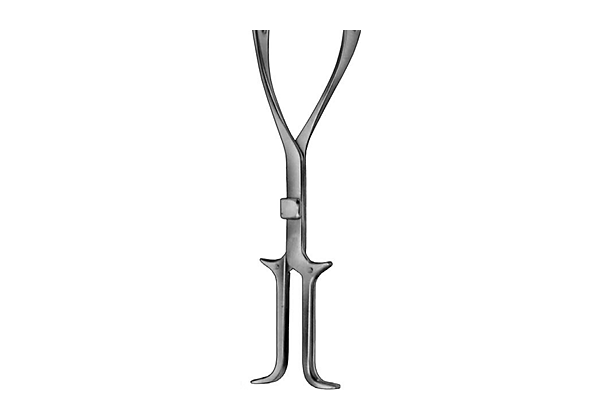
Kielland Obstetrical (Midwifery) Forceps
Kielland forceps rotate the fetal head from occiput posterior or transverse positions. They measure about 41 cm and have a sliding lock.
Sliding lock
A sliding lock lets the blades meet at different levels along the shanks. So the operator can correct asynclitism, where the head tilts to one side. Then the blades line up before rotation begins.
Slight pelvic curve
Classic designs have a marked pelvic curve that follows the birth canal. By contrast, this pattern keeps the curve slight. As a result, the blades can turn within the pelvis without sweeping a wide arc.
When teams use them
Rotation suits a fetal head that sits in a posterior or transverse position late in labor. However, rotational delivery calls for specific training and experience. Therefore, units often reserve it for senior obstetricians.
Stocking a rotational pair
Many units keep Kielland forceps on a dedicated rotational tray. Also, a spare pair covers the downtime while the first set goes through reprocessing. Meanwhile, our Kielland-Luikart version offers solid blades.
Looking after Kielland forceps
Slide the lock apart and separate the blades before cleaning. Next, brush the lock carefully, since residue can make it stiff. Then dry the blades, apply a light lubricant to the lock and store the pair together.
Kielland forceps specifications
- Length: about 41 cm
- Sliding lock
- Slight pelvic curve
- Use: rotation from occiput posterior or transverse
Ordering from Intrace USA
If your instrument shows a manufacturing defect within three years, we will put it right. In addition, every shipment gets a hand inspection in Atlanta. You can find care tips in our FAQs. Surgical stainless grades fall under ASTM F899. For breech deliveries, see our Piper forceps. The rest of our OB/GYN instruments is one click away.
Sold for professional use. Please read our care and sterilization guide and returns and refunds pages.

Reviews
There are no reviews yet.