




Description
Hunter Splinter Forceps
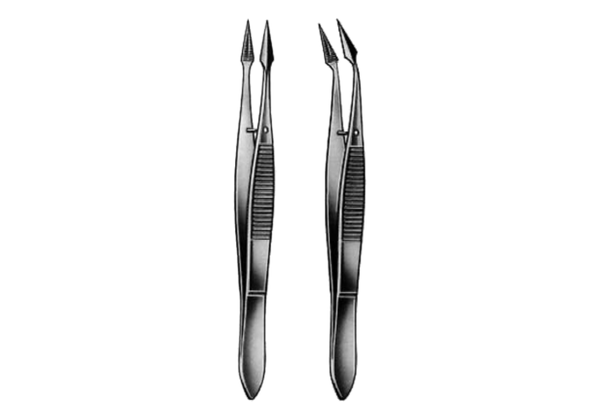
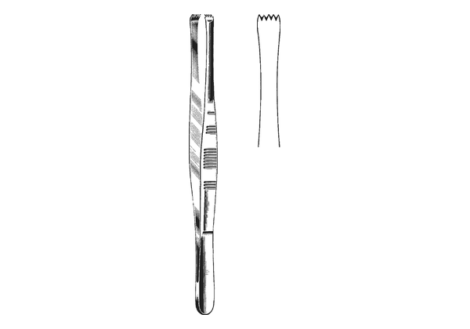
Hunter splinter forceps end in lance-shaped points. That shape lets the tips part tissue slightly and then close firmly on a fragment.
Straight or curved
The straight pair works well when you approach the splinter head-on. By contrast, the curved pair keeps your hand clear of the line of sight.
Lance-shaped tips
Each tip widens a little before it narrows to a point. So the forceps hold a thin sliver along its length rather than at one spot.
Grip
A serrated panel on each arm gives your fingers a firm purchase. Then you can apply fine pressure without the forceps slipping.
Choosing a pair
Many clinics stock one straight and one curved pair in the same length. For example, a 10.5 cm straight pair and a matching curved pair cover most splinter work. Hunter tips suit fragments that lie at an angle under the skin. With the curved pair, you can approach from the side and still see the entry point. Plus, the short length keeps the tips steady, since your fingers sit close to the work. Many podiatrists keep both shapes on the same tray.
Cleaning Hunter splinter forceps
Clear the tips after use so nothing dries in the serrations. Next, wash and rinse the forceps, then dry them. Also, check the lance points for burrs before the next cycle.
Hunter splinter forceps specifications
- Lengths: 10 and 10.5 cm
- Straight or curved
- Tips: lance-shaped points
- Stainless steel
Why buy from us
Also, every forceps we sell carries three years of cover against manufacturing defects. Then our Atlanta office checks every order before dispatch. You can find care tips in our FAQs. Meanwhile, ASTM F899 describes the steel grades used for surgical instruments. For a ribbed grip, see our Walter-Carmalt splinter forceps. Our full range sits in the thumb forceps category.
For professional use only. See our care and sterilization guide for notes on photos and materials, and our returns policy before you order.
Reviews
There are no reviews yet.