




Description
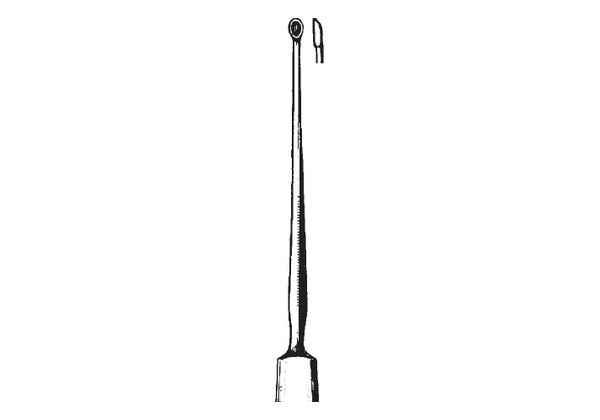
Hebra Chalazion Curette
The Hebra chalazion curette has a sharp cup on a slim handle for clearing a chalazion. Five cup sizes let you match the tool to the lesion. They run 1.0mm, 2.0mm, 2.5mm, 3.0mm and 3.5mm.
A quick look at chalazion surgery
A chalazion forms when an oil gland in the lid blocks. When it does not settle, a surgeon may open and drain it. First, a clamp holds the lid and controls bleeding. Then the curette scrapes out the contents.
Matching cup to lesion
Small cups give fine control. Larger cups, however, clear more with each stroke.
- 1.0mm and 2.0mm: small or early lesions.
- 2.5mm and 3.0mm: medium lesions.
- 3.5mm: larger cysts with more material.
Working the curette
Hold the handle like a pencil and rest your hand on the patient’s face. Next, use short strokes from the far side of the cyst toward you. This keeps the cup edge against the wall. Also, check the cavity as you go.
Why several sizes help
Lesions vary a lot in size. So a clinic with only one cup may struggle with very small or large cases. A small set covers most needs. In addition, a spare in the size you use most saves delays.
Cleaning the cup
Material sticks in a Hebra cup, so wash it straight after the case. Brush the inside and rinse well. Then dry it and check the rim. A dull or dented rim scrapes poorly.
Hebra order and warranty
Hebra curettes ship non-sterile; process them, then put them back into service. Our team backs all five Hebra cups with three years against manufacturing defects. Hebra curette steel meets ASTM F899. To hold back the lid, see the Desmarres retractor. Also explore our lid surgery and eye tools and the Intrace questions page.
Hebra curettes are for professional use only. See our cleaning advice and shipping times and costs.




Reviews
There are no reviews yet.