




Description
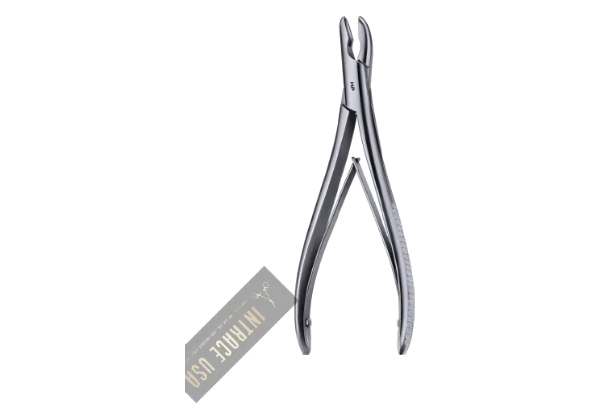
Guleke Bone Rongeur Forceps
The Guleke bone rongeur removes bone in cranial and spinal procedures. Surgeons use it to take controlled bites from a bone edge, so they can enlarge an opening or smooth a margin.
A general bone rongeur
In general, every neurosurgical tray holds a bone rongeur. For example, surgeons use one to trim the edge of a craniotomy or to remove the spinous process. The Guleke pattern serves these tasks at a 20 cm length.
Size
We list the Guleke bone rongeur at 20 cm. However, some catalogs quote about 20.5 cm. Ask us for jaw dimensions before you buy.
Cranial and spinal uses
In cranial work, the rongeur nibbles bone to widen a burr hole or trim a flap. Meanwhile, in the spine, it clears spinous processes and lamina before finer tools take over. So it often sees use early in the case.
Building a rongeur set
Rongeurs come in many sizes and jaw shapes. Therefore, pair this general pattern with a fine Kerrison and a smaller rongeur. That combination covers bulk removal and fine trimming.
Caring for your Guleke rongeur
Flush bone from the Guleke jaws as soon as surgery ends. Then work a stiff nylon brush over the jaws and hinge. Dry the rongeur, oil the hinge with instrument lubricant and sterilize it.
Guleke bone rongeur specifications
- Bone rongeur forceps, Guleke pattern
- Length 20 cm; some catalogs list 20.5 cm
- One size
- Stainless steel
Ordering the Guleke rongeur
Should workmanship on the Guleke rongeur fail, our three-year warranty applies. Our Atlanta team works the jaws by hand before it ships. See the FAQ area of our site for order answers. In addition, we base our rongeur alloy comments on ASTM F899. For a longer pattern, compare the Frykholm bone rongeur. Our neurosurgery bone instruments show more.
For professional use. The Guleke care notes describe Guleke image accuracy and nickel in stainless, and our delivery times page covers shipping.

Reviews
There are no reviews yet.