




Description
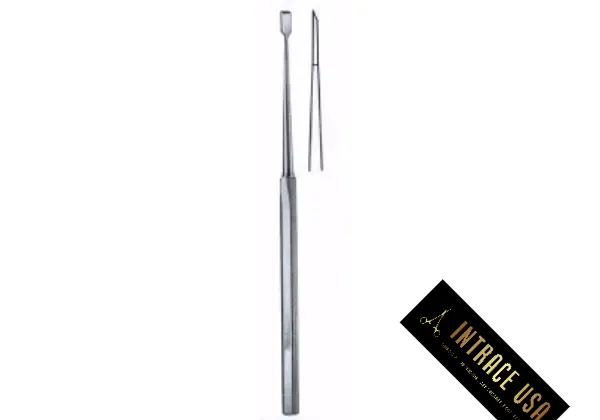
Freer Chisel
The Freer chisel is a narrow chisel for septal and nasal bone. Surgeons tap it with a mallet to make fine, controlled cuts during septoplasty and rhinoplasty.
Straight or curved
We offer two shapes: straight and curved. The straight version carries force directly to the edge. Meanwhile, the curved version reaches around anatomy that blocks a direct path.
Size notes
The catalogue lists this chisel at about 16.5 cm with a 4 mm blade. That narrow blade suits small spurs and precise trimming. So it works well when a wider chisel would take too much.
From Otto Freer
Otto Freer designed several septal tools, including elevators, knives and gouges. Many surgeons like to work with a matched set. This chisel fits naturally alongside the rest of his range. Also, familiar names make it easier for staff to lay out the tray.
Choosing a shape
If your surgeon mainly works in the front of the nose, straight often suffices. However, the curved version helps in tighter places. Therefore some teams order one of each.
Caring for your Freer chisel
Keep the narrow edge from hitting other tools at every stage. Rinse off debris promptly, then wash by hand. Finally, dry and sterilize it with an edge guard.
Freer chisel specifications
- Shape: straight or curved
- Catalogue data: about 16.5 cm, 4 mm blade
- Stainless steel
Ordering either shape
Our three-year warranty protects both the straight and curved 4 mm blade if a workmanship defect appears. Also, an Atlanta team member inspects your narrow chisel by hand before it leaves. The FAQ section explains payment and shipping. ASTM F899 is the key standard for narrow chisel steel and other surgical instrument steel. For septal incisions first, see the Freer nasal knife. Then look through our ENT tools page.
Clinical use by professionals only. How chisel photos match real items, and why stainless steel includes nickel, both appear in our care write-up. If you need a return, see the refunds and returns page.
Reviews
There are no reviews yet.