




Description
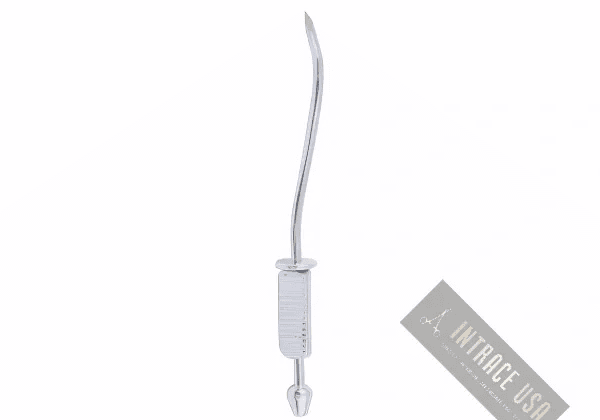
Douglas Trocar
The Douglas trocar reaches the pouch of Douglas through the back of the vaginal vault. In practice, gynaecologists use it to sample or drain fluid that collects in this lowest part of the pelvis.
Why the pouch of Douglas
When the patient lies or stands, free pelvic fluid settles behind the uterus. Therefore, a puncture at this point reaches it by the shortest route.
Size of the Douglas trocar
A 3 mm cannula is wide enough for aspiration yet makes only a small opening. Meanwhile, the stylet point passes the vaginal wall cleanly.
Clinical uses
For example, gynaecologists may use it to check for blood or pus in the pelvis. In addition, it can drain a small pelvic collection.
Approach
First, a speculum exposes the posterior fornix, and a tenaculum steadies the cervix. Then the trocar passes through the vault in the midline.
After entry
First, withdraw the stylet and attach a syringe to the cannula. Next, aspirate slowly and note the colour and amount of fluid.
Imaging today
Nowadays, ultrasound guides many pelvic punctures. Even so, a dedicated trocar remains useful where the clinician prefers it.
Douglas trocar details
- 3 mm cannula
- Sharp stylet
- Long gynaecological shaft
Douglas care
Rinse the cannula through with a syringe and wipe the stylet. Afterwards, dry and sterilise.
How we protect each trocar
Any trocar receives a personal examination at our Atlanta site before shipment. Our Douglas trocar has three years against manufacturing defects. Extra patterns are in the general surgical collection. For help with an order, browse our FAQ section. The FDA notes ASTM F899 for surgical steels. For a sister pattern, add the Landau trocar. A spare trocar in the sterile store saves a cancelled case.
Clinical use by professionals. Lead times show on our shipping policy. The care guidance mentions photo differences together with nickel in the steel.


Reviews
There are no reviews yet.