




Description
Dieffenbach Dissecting Knife
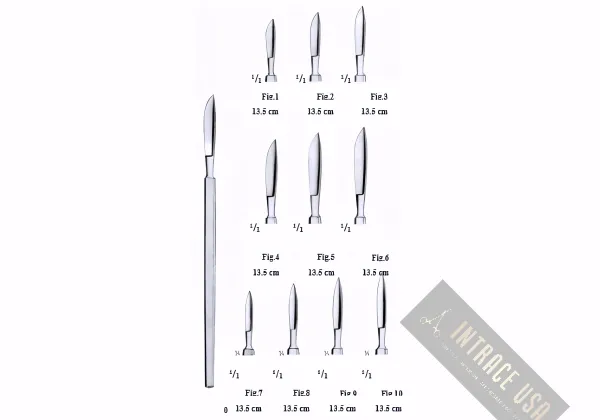
The Dieffenbach dissecting knife comes in ten blade figures. Each figure is a different blade shape, so you can match the knife to the tissue and the approach.
Ten blade shapes
The figures differ in blade shape and length. Because every figure costs the same, you can build a small range without paying more for the less common shapes.
Who uses the Dieffenbach dissecting knife
Surgeons use dissecting knives in open procedures. In addition, anatomy labs and pathology departments rely on them for specimen work. If you want help choosing figures, send us the shapes you use now.
Care
Clean each knife after use, then dry it completely. Also store the knives so the edges do not touch one another.
Building a set of figures
You do not need all ten figures to start. Instead, choose two or three that match your most common tasks, and add others as needs appear. Also, keeping the same family across the set means every handle feels the same in your hand. That consistency helps during long dissection sessions. In addition, label each knife in storage by figure number. As a result, your team finds the right blade quickly during a session. Finally, check each edge before use, since a dull blade drags through fine tissue planes.
Dieffenbach dissecting knife figures
- Fig. 1 to Fig. 10
- Stainless steel, reusable
Warranty and supply
The knife carries three years against manufacturing defects in every figure. Before shipping, we inspect it in Atlanta. See our FAQs for cleaning. Meanwhile, ASTM F899 covers the steel, and the Collin family sits among our dissecting knives.
Please note
The photo may show a different figure. For professional users. Nickel forms part of stainless steel, so we accept no liability for sensitivity. See the FDA on device metals.

Reviews
There are no reviews yet.