




Description
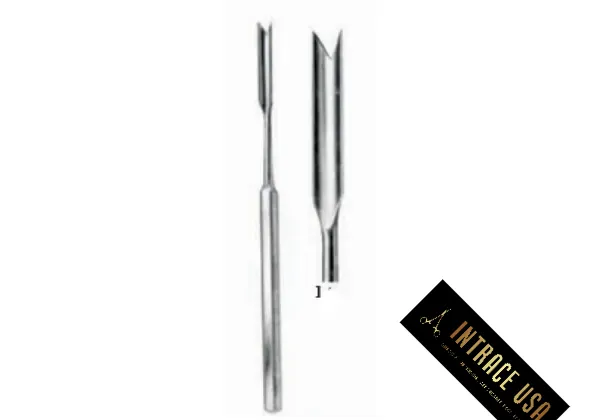
Ballenger Gouge
For removing ridges of bone in the nose, many septal surgeons keep a Ballenger gouge on the tray. Its hollow blade scoops out rounded strips as the surgeon taps it with a mallet.
Three blade widths
You can choose 4 mm, 6 mm or 8 mm. The 4 mm blade suits narrow, careful channels. In contrast, the 8 mm blade clears more bone with each pass.
The Ballenger name
William Ballenger wrote widely on nose and throat surgery. Several septal tools still carry his name, including a well-known swivel knife. This gouge belongs to the same family.
Where it helps
During septoplasty, a bony crest or spur can push the septum off the midline. Then the surgeon may use a gouge to lower it. Next, the septum can sit straighter.
Choosing widths
If you do mostly fine work, start with 4 or 6 mm. However, if you often clear larger crests, the 8 mm blade saves time. Many teams simply keep all three.
Caring for your Ballenger gouge
Scrub the hollow of the blade with a small brush after use. Rinse until no debris remains, then dry. Finally, sterilize it with an edge protector in place.
Ballenger gouge specifications
- Blade sizes: 4, 6 or 8 mm
- Nasal gouge with a curved blade
- Stainless steel
When you buy a 4, 6 or 8 mm gouge
Every gouge size ships with our three-year warranty, which answers for any workmanship defect. In addition, a member of our Atlanta staff reviews each 4, 6 or 8 mm blade by hand before shipping. For quick answers, see our FAQ help. ASTM F899 spells out steels for gouges and other surgical instruments. For the septal step that follows, look at the Ballenger septum knife. Also browse our ENT and septal instruments.
Three-width gouges are for professional use. Our care page for instruments explains gouge photo accuracy and why the alloy includes some nickel. Our shipping times page lists carriers.

Reviews
There are no reviews yet.