




Description
Aufricht Rasp
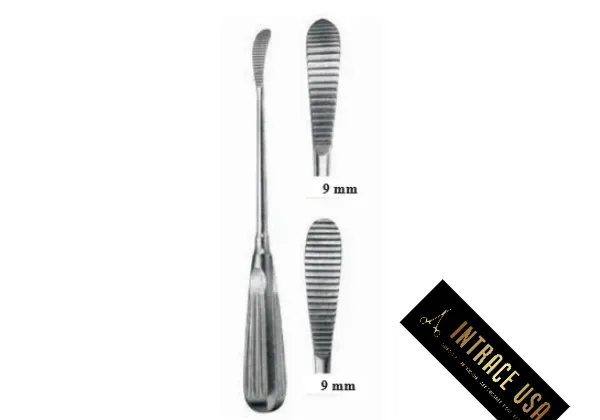
The Aufricht rasp is a nasal rasp for rhinoplasty, named after Gustave Aufricht. Surgeons use it to lower a bony hump and to smooth the nasal bones.
Pushing or drawing cut
We offer two cuts. A pushing cut removes bone on the forward stroke. In contrast, a drawing cut removes bone as the surgeon pulls the rasp back. So the choice depends on which stroke your surgeon prefers.
Size
The catalogue lists this rasp at about 21 cm with a 32 x 9 mm blade. That blade is fairly short and broad. Therefore it covers a useful width of the dorsum with each pass.
Why cut direction matters
Surgeons often feel more control on one stroke than the other. For example, many prefer to pull the rasp so it moves away from the eyes. Others like pushing strokes for early reduction. Offering both lets you match technique.
Choosing a cut
If you are unsure, ask your surgeon which stroke they use with their current rasp. Then order the matching cut. Some teams keep one of each on the tray.
Caring for your Aufricht rasp
Clean the teeth promptly, brushing in the direction of the cut. Next, rinse thoroughly and check that no debris remains. Finally, dry and sterilize it.
Aufricht rasp specifications
- Cut: pushing or drawing
- Catalogue length about 21 cm
- Blade: 32 x 9 mm
- Stainless steel
Ordering a pushing or drawing cut
Both the pushing and the drawing cut carry a three-year warranty for workmanship defects. So before dispatch, someone in our Atlanta team inspects each 32 x 9 mm blade by hand. Please read our FAQ guide for delivery and payment details. ASTM F899 describes steels suitable for rasps and other surgical instruments. To steady tissue during rasping, see the Cottle nasal retractor. In addition, our ENT tools collection holds related items.
Pushing and drawing rasps are for professional use. Our care notes explain how we photograph each cut and where nickel in stainless steel comes in, and our refund and return page explains returns.

Reviews
There are no reviews yet.