




Description
Angled Blade Handle
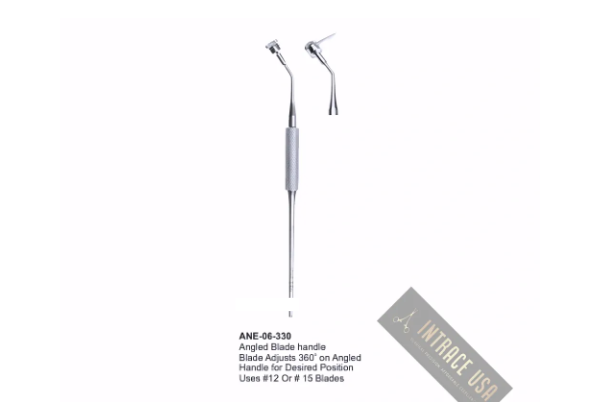
The angled blade handle combines an angled shaft with a blade mount that turns through a full circle. So you can point a #12 or #15 blade in whatever direction the site needs.
Turning the blade, not the wrist
In the mouth, many incisions run along surfaces you cannot face directly. Here you rotate the blade instead of contorting your hand. For example, distal and lingual cuts become easier to start and to finish cleanly.
Setting up the angled blade handle
Load a #12 or #15 blade, then turn the mount to the direction you want. Also check that the mount holds its position before you touch tissue. If it slips, clean the joint and try again.
Care
Rotate the mount while you rinse, because debris sits inside the joint. Then dry it well and store it in a set position before sterilization.
Choosing between #12 and #15
A #15 blade has a small curved belly, which suits sulcular and flap incisions. Meanwhile, the hooked #12 reaches around the back of teeth and into tight embrasures. Because the angled blade handle accepts both, many clinicians load a #15 for most work and switch to a #12 only when access demands it. Also, the rotating mount lets left and right handed clinicians use the same handle comfortably. That makes it a practical choice for shared operatories.
Specification
- Blade mount rotates 360 degrees
- Angled shaft
- Blades: #12 or #15
- Stainless steel, reusable
Buying from Intrace USA
Three years against manufacturing defects apply to the handle. We also inspect the rotating mount in Atlanta before dispatch. Our FAQ section explains cleaning, and ASTM F899 covers the stainless steel. For fixed alternatives, browse our scalpel and blade handles.
Important information
Blades ship separately. Designed for professional users. Because the steel contains nickel, allergic reactions remain outside our liability. Learn about device metals from the FDA.

Reviews
There are no reviews yet.