




Description
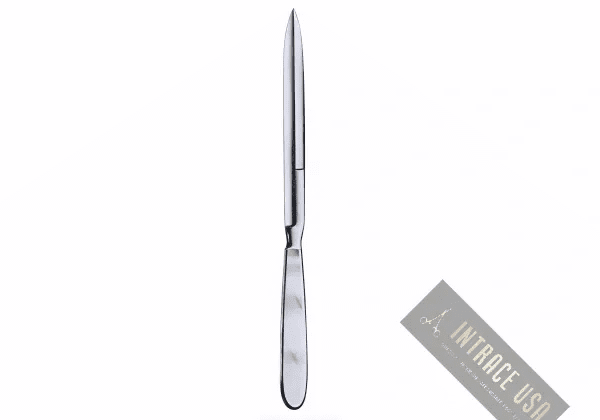
Catlin Amputating Knife
The Catlin amputating knife has a pointed, double edged blade. Surgeons use it to divide the tissue between paired bones, such as the radius and ulna or the tibia and fibula.
Why both edges cut
Between two bones, you often need to cut on the push and on the pull. With both edges sharp, the knife works in either direction without turning it. Also, the point lets you pierce the membrane before you sweep.
Three lengths
The 15 cm knife (6 in) suits the forearm. Meanwhile, the 18 cm (7 in) and 23 cm (9 in) lengths reach through the larger lower leg. Choose by the limb you treat most often.
Handling the Catlin amputating knife
Handle it with extra care, because both edges are sharp. After use, clean it, dry it and store it in a guard that covers both sides.
Pairing the Catlin with a flap knife
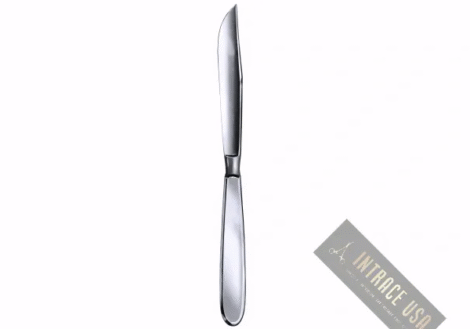
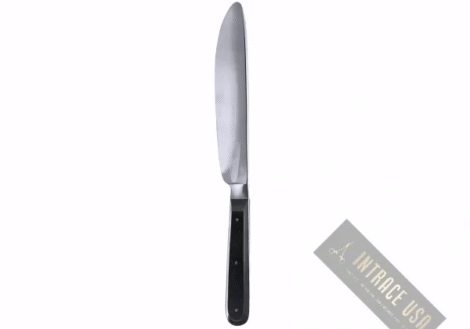
A Catlin rarely works alone. Typically, a single edged knife cuts the flaps first, and then the Catlin divides the tissue between the bones. After that, a saw completes the bone cut. So many sets hold a Liston or Collin knife beside the knife. Also, label the guard clearly, because a double edge needs extra care during handling.
Catlin amputating knife lengths
- Short: 15 cm, about 6 inches
- Medium: 18 cm, about 7 inches
- Long: 23 cm, about 9 inches
- Pointed, double edged blade
- Stainless steel throughout
Warranty and supply
Catlin knives from us come with three years against manufacturing defects. Also, we inspect both edges in Atlanta prior to dispatch. See the FAQs for reprocessing. For steel standards, the FDA recognizes ASTM F899. Single edged options sit in our amputation knife range.
Please note
The photo shows one length. Professional use only. Since the alloy contains nickel, Intrace USA cannot accept liability for sensitivity. FDA guidance on device materials explains more.


Reviews
There are no reviews yet.