




Description
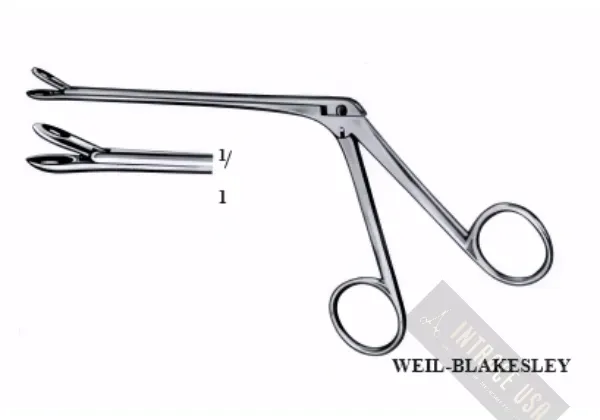
Weil-Blakesley Sinuscopy Forceps
Weil-Blakesley sinuscopy forceps grasp and remove tissue during sinus surgery. ENT surgeons use them widely in ethmoid work and polyp removal, often through an endoscope.
A classic ethmoid pattern
The forceps reach into the ethmoid cells and bite off tissue each time they close. As a result, the surgeon clears diseased tissue step by step. Many surgeons therefore consider them a core sinus instrument.
Many options
We offer lengths of 12 cm and 17 cm. In addition, you can choose a 0, 45 or 90 degree angle and a right or left side. Jaws come in 2.5, 3, 3.5 or 4 mm, for 48 options in total.
Why angles matter
Straight forceps suit areas directly ahead. However, angled jaws reach around corners, such as toward the frontal recess. So many trays hold straight and angled versions together.
Building a set
First, pick the lengths your approach needs. Next, choose the angles and jaw widths you use most. We are glad to help you plan a balanced selection.
Caring for your Weil-Blakesley sinuscopy forceps
Open and rinse the jaws right after the case. Then flush the joint and brush away trapped tissue. Dry the forceps fully before sterilization.
Weil-Blakesley sinuscopy forceps specifications
- Working lengths of 12 or 17 cm
- Angle: 0, 45 or 90 degrees
- Side: right or left
- Jaw widths: 2.5, 3, 3.5 or 4 mm
- Stainless steel
Ordering the right variant
Each Weil-Blakesley variant carries a three-year warranty on workmanship quality. In Atlanta, our team inspects every pair by hand before shipment. Mixed orders are easy; the FAQ page explains how. Hospitals often point to ASTM F899 when they specify surgical instrument steel. For cutting, add the standard sinuscopy scissors. More sinus tools sit in our ENT surgery range.
Only for professional ENT use. Our care page discusses why angled forceps may look different in photos and the nickel in stainless steel; our returns policy covers returns.

Reviews
There are no reviews yet.