




Description
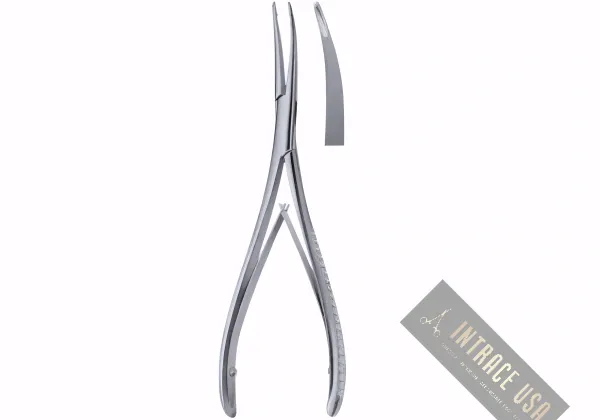
Stellbrink Bone Rongeur Forceps
The Stellbrink bone rongeur is a fine instrument with a 2 mm bite. Standard, light-curve and strong-curve jaws reach bone at different angles.
A tiny bite
Each squeeze removes only a sliver of bone. Therefore the surgeon can shape with great care. Besides, that matters near joints and teeth.
Curves and lengths
The standard version comes at 15 cm and 18 cm. Meanwhile, the light curve comes at 18 cm and the strong curve at 15 cm. So there are four options in all.
Who uses the Stellbrink bone rongeur
Oral surgeons shape bone close to roots and implants. Also, carpal and finger cases suit it. It helps in facial work too.
Choosing a curve
Choose the standard jaws for direct access. However, choose a curve when the bone faces away. The strong curve reaches the tightest corners.
A fine specialist
Few rongeurs combine a 2 mm bite with a choice of curves. Consequently, the Stellbrink fills a niche on fine trays. Moreover, its control rewards patient technique.
Stellbrink bone rongeur options
- Standard jaws at 15 cm or 18 cm
- Light curve at 18 cm
- Strong curve at 15 cm
- 2 mm bite throughout; non-sterile
Care for the Stellbrink
Clean the tiny cups with a fine brush under running water. Dry thoroughly. Finish by oiling the pivot so the action stays light.
Choosing your rongeur
An Atlanta colleague assesses the Stellbrink rongeur by hand before sealing the box. Purchasers get three years against manufacturing defects for the Stellbrink rongeur in all cases. For the basics of stainless alloys for surgery, look up ASTM F899. The buyer FAQ clears up returns and delivery. Searching for a bulk price? Email our team by email. Other pieces are in the orthopedic range. A second rongeur in the sterile store covers reprocessing gaps. For another approach, explore the Friedman rongeur.
Sold for professional use. The cleaning guide outlines how photos may vary along with nickel content. Shipping options live on our shipping page.

Reviews
There are no reviews yet.