




Description
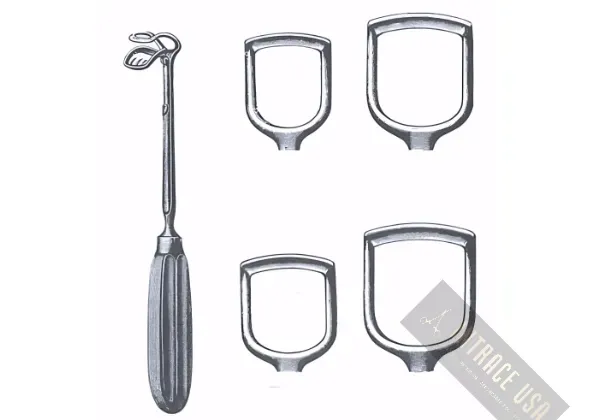
St. Clair Thompson Adenoid Curette
The St. Clair Thompson curette clears adenoid tissue from the space behind the nose. Throat surgeons reach for it during adenoidectomy, usually in children.
Scraping the adenoids
The surgeon passes the curette behind the soft palate. Then a firm sweep scrapes the adenoid tissue away. As a result, the space behind the nose opens up and breathing through the nose can improve.
Four blade sizes
We list 17, 19, 21 and 22 mm blades. Smaller blades suit young children. Meanwhile, the larger sizes suit older children and adults. The steps between sizes are small, so you can fine-tune the fit.
Where it fits
Many surgeons combine adenoidectomy with tonsillectomy. For instance, a gag holds the mouth open for both steps. The curette then works behind the palate while suction clears blood.
Choosing blade sizes
Most departments keep two or more sizes. Start with the typical age of the children on your lists. Then pick sizes that cover that range, and ask us if you need more detail on each blade.
Caring for your St. Clair Thompson curette
Rinse the blade quickly after surgery. Then brush the edge and shaft gently to lift any tissue. Finally, dry the curette well and protect the blade during storage.
St. Clair Thompson curette specifications
- Blade sizes: 17, 19, 21 or 22 mm
- Adenoid curette pattern
- Stainless steel
Ordering curettes
We stand behind each curette for three years through our three-year warranty on workmanship. Prior to departure from our Atlanta office, a staff member inspects it by hand. Our FAQ page has answers on ordering. Also, ASTM F899 is the steel reference we cite for curettes and other surgical tools. For a different pattern, see the Barnhill adenoid curette. Then browse our ENT range.
For hospital and clinic professionals. Curette photo differences and nickel in stainless alloys: our care and sterilization notes page explains both, while the shipping overview explains transit times.

Reviews
There are no reviews yet.