




Description
Rosen Knife
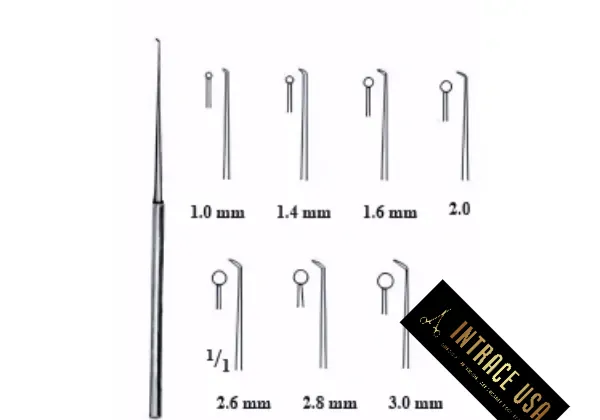
The Rosen knife is a small otology knife for incisions in the ear canal. Surgeons use it to cut the canal skin and start the tympanomeatal flap in tympanoplasty and stapes surgery.
The first cut
Many ear operations begin with a small incision in the canal skin. So the knife must be sharp, small and easy to guide. The surgeon then lifts the flap with an elevator.
Seven blade sizes
Choose a blade of 1, 1.4, 1.6, 2, 2.6, 2.8 or 3 mm. Small blades especially suit narrow canals and precise cuts. Larger blades, however, make longer incisions with fewer passes.
In the otology set
The knife usually sits beside elevators, fine suction and a speculum holder. Also, surgeons often keep two blade sizes so they can adapt to each canal. After the incision, the Rosen elevator commonly takes over.
Which blade to choose
Think about the canals you usually operate on. Then pick a small and a medium blade as your core pair. If you often need long incisions, add a 2.8 or 3 mm blade too.
Caring for your Rosen knife
Keep the blade clear of heavier steel. Wash it by hand using a soft nylon brush. Afterward, rinse it, dry it, and store it in a slotted rack for sterilization.
Rosen knife specifications
- Blade sizes: 1, 1.4, 1.6, 2, 2.6, 2.8 or 3 mm
- Seven versions
- Stainless steel
Ordering knives
Each knife includes a three-year warranty should any workmanship defect arise. Before shipping, our Atlanta staff examine every edge by hand. For payment and tax questions, try our FAQ desk. ASTM F899 describes the steel grades behind surgical instruments like this one. For the next step, the Rosen elevator lifts the flap. You can also shop the full ENT surgical instrument range.
For professional use. Our reprocessing reference explains knife photos and the nickel within these alloys, and our return rules cover exchanges.


Reviews
There are no reviews yet.