




Description
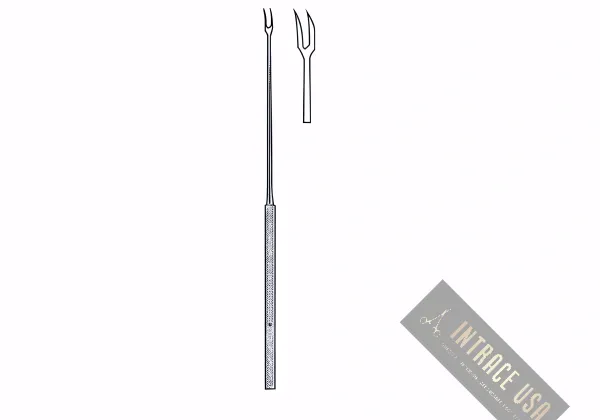
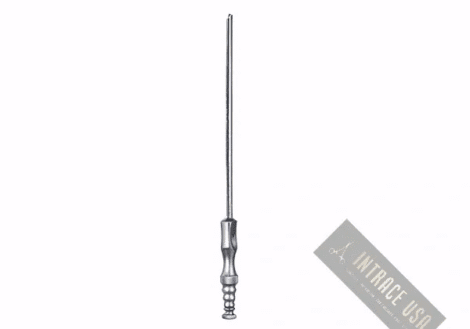
Okonek-Yasargil Tumor Fork
The Okonek-Yasargil tumor fork holds and steadies tumor tissue during resection. Neurosurgeons use it with a knife, scissors or suction to remove a tumor piece by piece.
Holding tissue still
Soft tumor tissue tends to move away from a cutting tool. Therefore the surgeon anchors it with the fork prongs. Meanwhile, the other hand cuts or aspirates with more control.
Four fork sizes
We offer the fork at 23 cm in 3, 4, 5 and 8 mm sizes. The small sizes suit deep, narrow corridors. In contrast, the 8 mm fork holds larger pieces during debulking.
Role in a tumor resection
Surgeons often use it through the operating microscope in deep cranial work. For example, they may fix a tumor fragment while a tumor knife separates it. Then they lift the piece out and move on.
Selecting sizes
First, look at the size of the corridor you usually work through. Next, choose one small and one larger fork, so both fine and bulk steps are covered. If you need guidance, contact us with your case mix.
Caring for your Okonek-Yasargil tumor fork
Clean the prongs right after surgery, before tissue dries between them. Use a soft brush and a mild detergent, then rinse well. Dry the fork fully, protect the tips and sterilize it on your normal cycle.
Okonek-Yasargil tumor fork specifications
- 23 cm length
- Fork sizes 3, 4, 5 or 8 mm
- Stainless steel
Ordering information
This fork includes our three-year warranty against defects in workmanship. We check every piece by hand in Atlanta prior to shipping. Visit our FAQs for answers on orders and accounts. For the steel itself, ASTM F899 is the recognized standard for surgical instruments. A natural companion is the Samii tumor knife. You can also see all items in our neurosurgery range.
For professional use. The care guide explains why photos may vary and covers nickel in stainless steel, while the returns policy explains refunds.
Reviews
There are no reviews yet.