




Description
Wire for Nasal Snare
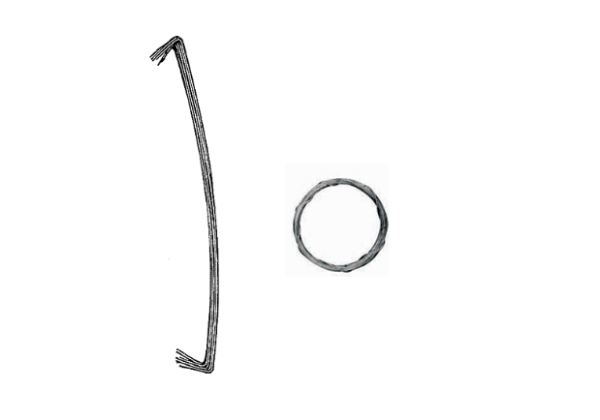
This nasal snare wire forms the loop of a nasal polyp snare. Clinicians cut a length from the roll, thread it into the snare and shape the loop before each use.
What the wire does
A polyp snare works by passing a wire loop around a polyp. Then the user tightens the loop, which cuts through the stalk. So the wire is the part that actually does the cutting.
Roll length and thickness
Each roll holds 33 ft, or 10 m, of wire. You can choose 0.4 mm or 0.3 mm thickness. The thicker wire resists kinking, while the thinner wire forms a finer loop.
Which snares it suits
Our snares, such as the Krause, Krause-Voss and Lange-Wilde, all use a wire loop. However, each snare accepts a certain range of thickness. Please check your snare’s needs or ask us before you order.
Choosing a thickness
Many clinicians use the 0.4 mm wire for general polyp work. Meanwhile, the 0.3 mm wire suits smaller loops. If you are unsure, order a roll of each and compare them in your own snare.
Handling and storing the roll
Keep the roll dry and closed between uses. Also cut each new length with clean wire cutters. Then load it into the snare and follow your facility’s protocol for sterilizing the assembled instrument.
Nasal snare wire specifications
- Roll: 33 ft (10 m)
- Thickness: 0.4 mm or 0.3 mm
- Replacement loop wire for polyp snares
- Stainless steel
Wire roll ordering
Our three-year warranty also covers each wire roll against workmanship defects. Before we post a roll, an Atlanta team member checks the spool by hand. For common questions on restocking, see the snare wire FAQs. Wire and other instrument steels relate to ASTM F899. To put this nasal snare wire to work, pair it with a Krause snare. Our nasal and ENT supplies include more snares.
Snare wire is for professional use. The snare wire care and sterilization notes discuss how photos of a roll may vary and why stainless steel includes nickel. Wire rolls follow our snare wire standard returns terms.
Reviews
There are no reviews yet.