




Description
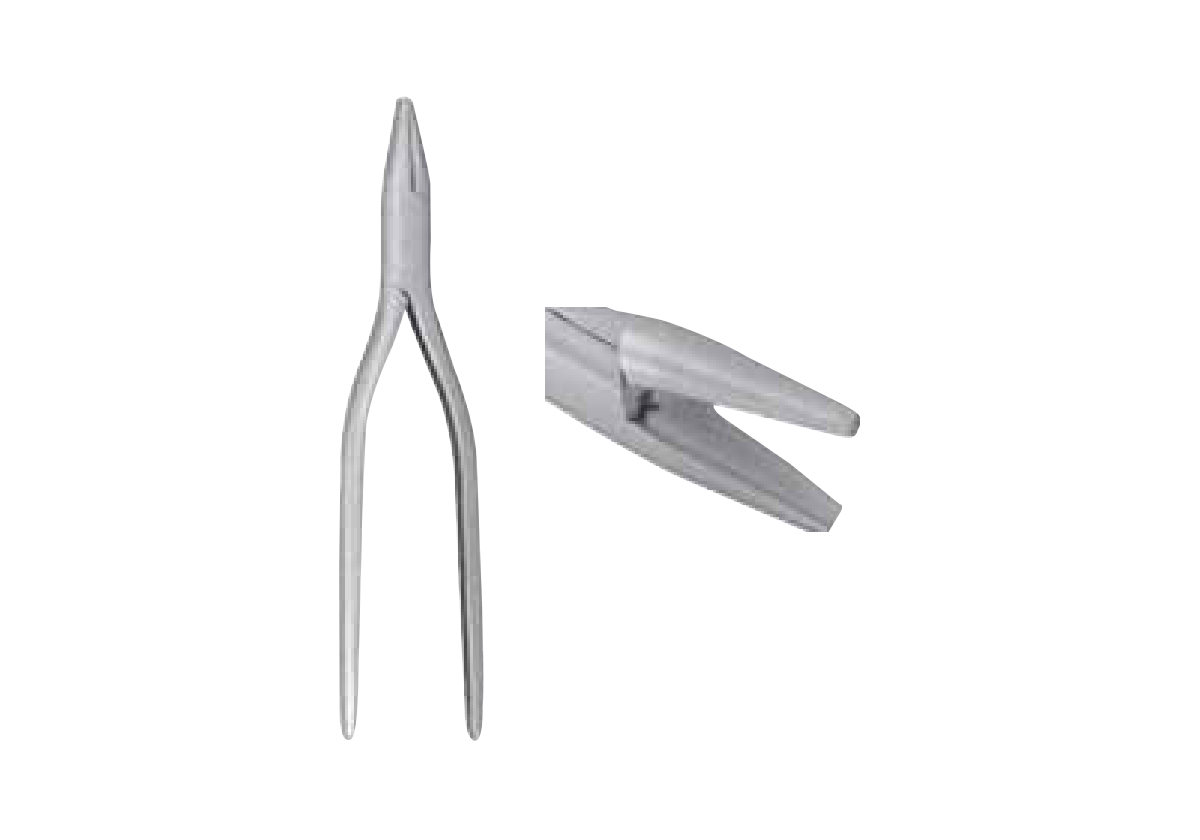
McKellops Loop Forming Pliers
McKellops loop pliers give you a bit more room than most light loop patterns. Their listed limit is 0.80 mm, or .032”. So they handle firmer loops in appliance and lab wire, as well as standard archwire.
The Extra Headroom
Many loop pliers top out at .028”, but this one goes to .032”. That gap sounds small, yet it matters when a lab case calls for a stiffer spring or loop. Still, treat .032” as the hard ceiling, not a guide.
Typical Jobs
- Loops in removable appliance wire
- Springs and hooks at the lab bench
- Loops in archwire at the chair
- Any loop in wire up to .032”
When to Pick Something Else
For very light wire, a finer plier gives better feel. On the other hand, facebow wire needs a far heavier tool. Because of that, the McKellops pattern sits in the middle of a good plier set. Study the photo to see the beak form.
Clean Before It Dries
First, rinse the plier promptly, before residue hardens. Next, scrub the joint and the inner faces of the beaks. Then dry it well, and only after that send it on to sterilisation. That order keeps the hinge smooth and the steel bright.
Testing the Closure
Every few weeks, close the plier on a strip of paper. It should grip along the full tip. However, if it grips only at the back, the beaks may have sprung. In that case, retire it from fine work.
Sourcing and Status
Also, this pattern follows our own drawing. Our team in the United States inspects each one. Expect it non-sterile in the box; each cleaning and sterilisation cycle readies it again.
These McKellops loop pliers come backed by three years against manufacturing defects if the build ever lets you down. Its stainless steel meets ASTM F899. For finer loops, try the Peeso loop plier, or browse the orthodontic section of our store. Our common questions explain orders and returns.
For use by dental teams. Reprocessing tips sit on our care page, while transit times sit on our shipping page.

Reviews
There are no reviews yet.